Dear Reader,
Today is Thanksgiving in the US. While Elm Analytics is just outside of Detroit, many of you read the Digest from outside the US, where Thursday is just another workday (sorry!). But being grateful doesn’t need a holiday, so I want to say it to all of you.
Thank you.
Between suppliers, customers, launches, and the latest geopolitical challenges, your time and attention are already stretched thin, and you still make room for the Digest every week.
Thank you too for passing it along to colleagues, for writing in when we miss something, and for letting us know when something resonates with you. All of it makes the Digest better.
The Digest turns ten in February, and I’m grateful you’re part of it.
So, Happy Thanksgiving to those celebrating… and wherever you’re reading, thank you. Now, on to this week’s issue. -nick
Contents
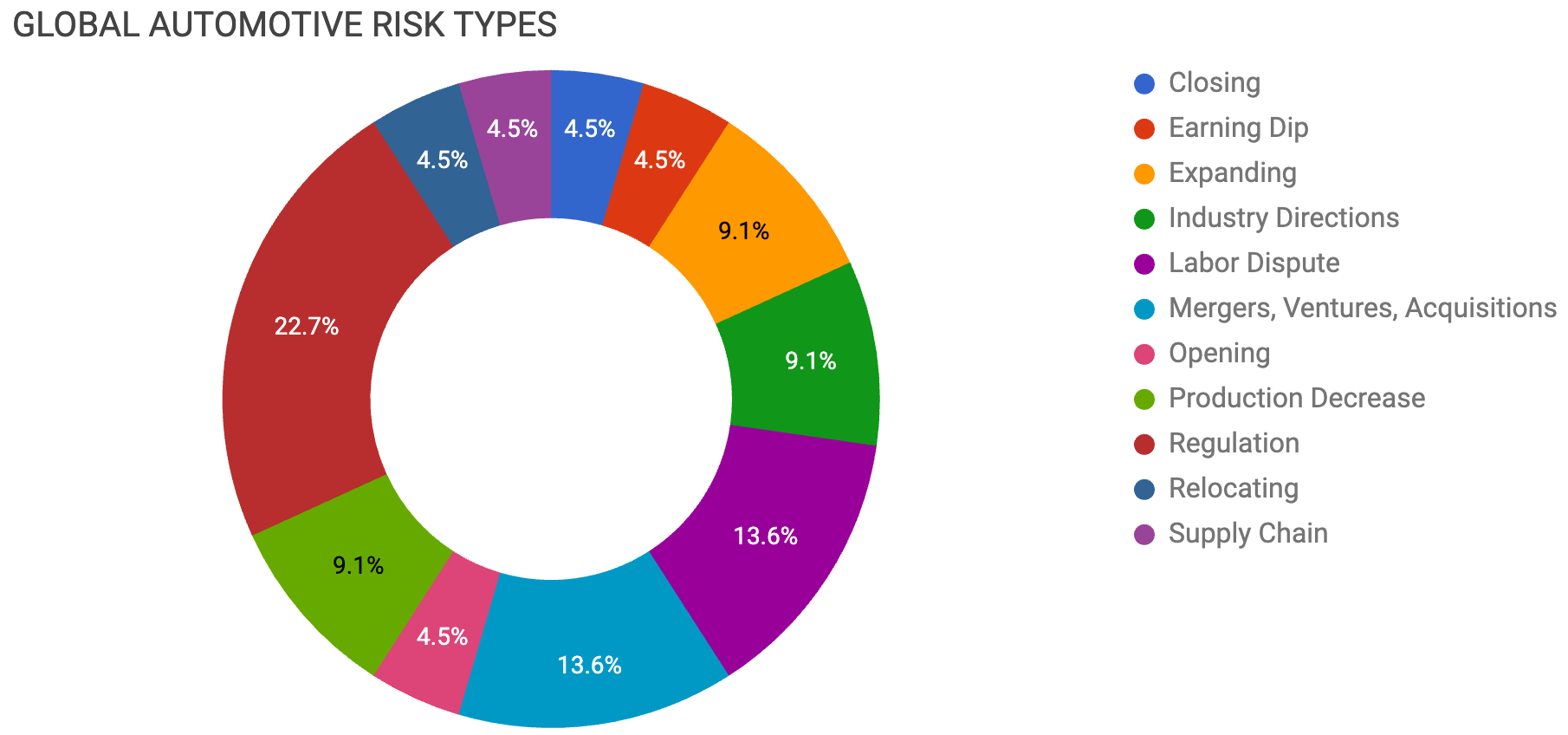
CLOSING
Michigan plant closures deepen auto supplier job losses
EARNING DIP
Leapmotor profit falls 73% despite record vehicle deliveries
EXPANDING
Niron plans $1.8B Alabama plant for rare-earth-free magnets
BIOin plans $58M Toluca plant for automotive racks
INDUSTRY DIRECTIONS
VW targets 300k annual China-built exports by 2030
By-wire chassis shift system integration toward Chinese automakers
LABOR DISPUTE
German auto wage strikes disrupt BMW and Audi
Volkswagen wage talks stall amid 4.5k-worker Emden protest
Tentative deal eases strike threat at California ports
MERGERS, VENTURES, ACQUISITIONS
Ottawa fights Stellantis’s planned Brampton sale to Roshel
BYD enters exclusive talks for Ineos’s Hambach plant
Ineos targets 2028 US production amid Hambach talks
BASF agrees to sell battery recycling to Cylib
OPENING
Yokohama opens Saltillo tire plant and starts expansion
PRODUCTION DECREASE
Stellantis plans two-shift Sochaux assembly as demand weakens
GM to end Silverado 1500 production in Oshawa
REGULATION
EU plans hybrid import quotas starting December 1
UK industry challenges EU caps on British-built hybrids
Autos and steel remain obstacles in US-Canada talks
Toyota, BMW, Audi seek US investment-linked tariff relief
South Korea plans EV support amid Chinese competition
SUPPLY CHAIN
Agratas loses second contractor on $6.8B UK gigafactory

Closing
Eleven automotive-related WARN notices posted in Michigan now cover 1,778 jobs, with layoffs from mid-August 2026 to mid-March 2027. Of those jobs, 1,428 are at suppliers rather than General Motors.
Inalfa Roof Systems, Auburn Hills: plant closure and office cuts, 142 jobs as of Dec. 14. Inalfa has been owned since 2011 by a parts arm of China’s BAIC Group.
Woodbridge, Eaton County: temporary layoff of 100 workers from Dec. 18, citing a lost contract.
ADAC Automotive, Saranac: plant closure, phasing out 98 jobs from Dec. 18 to June 30, 2027.
Detroit Chassis, Lynch Road, Detroit: temporary layoff of 175 workers from Dec. 31.
GM, Lansing Grand River Assembly/Stamping and Lansing Regional Stamping: 350 layoffs from Jan. 14, timed with the end of the current Cadillac CT5 before a next-generation gas version.
AUTOKINITON, Euclid Manufacturing, Detroit: site closure, 136 jobs, with first layoffs Jan. 18.
The Woodbridge and Detroit Chassis layoffs count as job losses under federal rules if they run past six months, in June 2027. [Issue #505 covered Dakkota’s Detroit and Lansing-area closures, and Issue #504 covered Lear’s Sterling Heights molding plant, whose WARN filing lists Nov. 9.]

Earning Dip
Leapmotor's Q3-2026 net profit fell 73% from a year earlier to $5.96M, and 93% from Q2-2026, even as deliveries hit a record 310k units, up 78%. Gross margin slid to 10.9% from 14.5% a year earlier, which the company blamed on raw material costs and product mix. Higher ocean freight added to the drop from the second quarter. Revenue rose 63% to about $4.72B, and exports jumped 264% to 63k units, or 20.4% of sales. Leapmotor also signed a $110M deal to engineer a new Opel C-SUV for Stellantis, running until production starts in September 2028, and the two may sign separate parts supply deals later. [Issue #504 covered Stellantis's plan for a Zaragoza line to build a new Opel electric SUV from 2028.] The Opel deal makes Leapmotor an engineering supplier to a European OEM, and the option for separate parts supply agreements is the clause Zaragoza-area suppliers should watch.

Expanding
Niron Magnetics will build a $1.8B campus in Dothan, Alabama, to make iron nitride permanent magnets (which use no rare earths) for cars, AI infrastructure, industrial equipment and electronics. The 1.6M ft² plant sits on the 446-acre Westgate Super Site, served by a CSX rail line, and is designed for 10k tons of magnets a year. Construction starts in 2028, and production in 2029, and Niron expects to need about 700 workers within five years. Its first high-volume plant, in Sartell, Minnesota, opens in 2027 with capacity for 1.5k tons a year. The state says about 90% of rare-earth magnets are made overseas. While iron nitride avoids rare earths, Dothan's output starts in 2029, so it does nothing for near-term rare-earth exposure in EV motors.
Mexican supplier BIOin will invest $58M in a new plant in Toluca, Mexico, built in two phases near the Atlacomulco highway. BIOin makes the plastic and metal racks and bins that carmakers use to move, store, and protect parts in their plants. It has sold to General Motors, Toyota, and BMW since 2008. It gave no build schedule, start date, or staffing figure.

Industry Directions
Volkswagen plans to export about 300k vehicles built in China a year by 2030 to Mexico, South America, the Middle East, Africa and Southeast Asia, with none bound for the US for now. Budget sedans such as the Jetta VA3 are among the models. Its Chinese joint ventures sold just 1.2M cars in the first nine months, down 35%, and swung from a profit of about $815M last year to a loss of more than $120M. CFO Arno Antlitz reportedly called the export target conservative. VW already builds the Jetta at Puebla, so Chinese-built imports into Mexico and South America would likely compete with VW's own regional plants and their suppliers.
The Smarter the Chassis, the Less Work for Suppliers?
Gasgoo's report from its smart chassis conference looks at how by-wire chassis are shifting work between automakers and suppliers. It's worth a read for purchasing and engineering teams. Chinese automakers increasingly define chassis functions themselves and coordinate braking, steering and suspension as one system. Some plan to bring control software in-house. Suppliers such as Bosch, ZF and Nexteer are responding by selling software, modules and engineering services separately from their hardware. Cost is still a hurdle. Steer-by-wire runs about $150 to $300 more than redundant electric power steering and comes standard on under 1% of Chinese passenger cars.

Labor
German automakers face a winter of strikes as the model behind the world's highest-paid auto workforce breaks down. At about $72 an hour, German auto workers earn more than 1.5x their US counterparts and 3x+ what Polish auto workers earn. Chinese competition, US tariffs, and weak demand have eroded the profits that paid for it. IG Metall says about 340k workers have joined walkouts in its regional pay round, and one-day strikes have hit BMW and Audi. Suppliers are in worse shape. Roland Berger and Lazard expect European supplier margins to average 2.9% this year, down from 7.1% in 2018, a steeper fall than at Chinese rivals. Germany's auto workforce is at its lowest in at least 21 years. [Issue #509 covered IG Metall's 5% pay demand.]
Volkswagen’s first round of talks with IG Metall in Emden on Nov. 24 broke up after two hours, as about 4.5k workers protested outside, some carrying black coffins. The next session, on Dec. 15, is the last chance for a deal before strikes become possible in January. [Issue #509 covered VW’s demands for a pay freeze and longer hours.] VW now also wants to end bonuses paid at 25 and 35 years of service and scrap separate wage agreements for managers. It expects an operating margin of no more than 1% this year, down from 5.9% in 2024. By the end of June 2027, it plans a roadmap for four German plants with no successor models, which could shift to military work, build cars for China, or close in the next decade. German suppliers face strike risk at VW from January, with margins near 2.9% and little cushion for lost volume.
The Pacific Maritime Association and ILWU Local 26 reached a tentative deal early on Nov. 21, easing the threat of a strike by about 250 security watchmen at six terminals in Los Angeles and Long Beach. Members still have to ratify it, and the current contract stays in force until they vote. The six terminals handle more than half of the two ports’ cargo, and other dockworkers were expected to honor picket lines. [Issue #506 covered the strike threat.] Even without a strike, nearly half the imports waiting for on-dock rail at Los Angeles had been there nine days or more as of Nov. 18, according to Flexport.

Mergers, Ventures, Acquisitions
Industry Minister Mélanie Joly met Stellantis CEO Antonio Filosa, Ontario Premier Doug Ford and Unifor in Toronto on Nov. 20 as Ottawa tries to stop the sale of the idled Brampton, Ontario, plant to defense contractor Roshel. Stellantis did not change its decision, but the union says it heard substantial proposals, and talks continue this week. Citing Stellantis figures, Ford said the plant costs about $94M a year to keep while idle. Stellantis pointed to tariffs and to greenhouse gas costs that US plants don’t carry. Ottawa threatens to sue to recover funding from its 2022 commitment of up to $370M for Brampton and Windsor, while Stellantis says it will repay only the $17M it received for Brampton. [Issue #508 covered Ottawa’s notice of default. Its 30-day deadline runs out around Dec. 12, and the sale is expected to close by year-end.]
Plants are changing hands in Europe too. BYD has entered exclusive talks to buy Ineos Automotive’s plant in Hambach, France, which employs nearly 900 people and builds the Grenadier SUV and Quartermaster pickup. The deal still needs consultation with works councils, and President Emmanuel Macron says details will come at the Choose France summit on Jan. 18, 2027. Hambach would be BYD’s second car plant in Europe after Szeged, Hungary, which is due to start mass production in Q4-2026.
For Ineos, the sale is part of a move to the US, where it makes 70% of its sales. It has a shortlist of US sites, will decide within a few months, and aims to start output in 2028, using an existing plant or a contract manufacturer rather than building one. Its vehicles face a 15% US duty, and the Quartermaster also faces a 25% chicken tax on imported pickups. Ineos aims to close the Hambach sale in the first quarter of 2027, and output there continues for the medium term. If the talks succeed, all of Ineos's global production moves to the US. Grenadier and Quartermaster suppliers in Europe face a customer moving all output to the US by 2028, while the plant passes to BYD, the industry's most vertically integrated automaker.
BASF has agreed to sell its battery recycling business to cylib, so its battery unit can focus on cathode materials. The sale covers its recycling work in Europe and North America. This includes the black mass plant and test recycling line in Schwarzheide, Germany, as well as patents and customer contracts. The deal is expected to close in mid-2027, and terms were not disclosed. BASF also wants partners for its idle precursor cathode plants in Battle Creek, Michigan, and Harjavalta, Finland.

Opening
Yokohama Rubber has opened the first phase of its tire complex in Saltillo, Coahuila, and started a second phase, bringing its Mexican investment to about $495M. The first phase, on about 151 acres, is built for 5M passenger and light truck tires a year for North America. The $115M second phase will produce off-the-road tires for mining, construction, and farm equipment, about 10.65k metric tons a year by rubber weight, starting in the second quarter of 2028. Coahuila expects the two phases to need about 1.5k workers. The plant also faces a USMCA Rapid Response case. On Nov. 12, Mexico's labor ministry found signs of employer interference and three firings tied to union activity, and the US has suspended liquidation of customs entries from the plant during the review. With liquidation suspended, duties on Saltillo tires remain unsettled while the case runs, leaving costs unknown to its customers.

Production Decrease
Stellantis will drop the night shift at Sochaux, France, and return to two day shifts at 850 vehicles a day, citing lower demand and new competition. The night shift was added in November 2024 for the Peugeot 3008 and 5008. Of the plant's 1.1k temporary workers, 500 will not have their contracts renewed. A night shift stays on to prepare EV battery packs, and electric versions should rise to 47% of output from January, up from 20% to 22%.
Oshawa is cutting back too. General Motors will end Chevrolet Silverado 1500 production at Oshawa, Ontario, before year-end, leaving the Silverado HD as the plant's only product. GM says the plant, with more than 3k workers, will keep two shifts through the next-generation HD trucks, which will add the GMC Sierra HD. AutoForecast Solutions expects those to start in early 2029 at about 100k a year, roughly half the plant's capacity, and the refreshed 2027 Silverado HD starts in December. Oshawa built 70.6k pickups through September, down from 95k a year earlier, and GM plans to spend about $350M on upgrades over three years. [Issue #488 reported AutoForecast's forecast that the 1500 would leave, which GM Canada disputed at the time.]

Regulation
The European Union plans to cap imports of hybrids and plug-in hybrids from China, Japan, Turkey, South Korea, the UK and other exporters, with quotas applying to cars that clear customs from Dec. 1. China's quota could be 350k in 2027, about half the 800k expected this year, against 310k for Japan, 230k for Turkey and 105k for South Korea. The quotas are based on 2025 volumes and rise 6% a year for three years, taking China to 417k in 2030. The EU widened the cap beyond China so it works as a global safeguard under WTO rules, and EU-built cars don't count. Chinese hybrid exports to Europe nearly tripled to 675k through October as automakers shipped ahead of the cap. Battery-electric imports stay under the existing tariffs. [Issue #504 covered the earlier China-EU hybrid curbs.]
The UK industry says it risks becoming collateral damage. The EU plan, as reported by Automotive News Europe, sets the UK’s yearly quota for mild, full and plug-in hybrids at about 192k, based on 166k exports in 2025 plus a 15% allowance. That is below the 225k hybrids Britain shipped to the EU in 2023, and Mike Hawes, CEO of the Society of Motor Manufacturers and Traders, called the numbers totally insufficient. This version of the plan also caps Mexico and Morocco. Nissan, Toyota and Jaguar Land Rover build hybrids in the UK for export to Europe. For UK plants, battery-electric output is the way around the cap, as Nissan’s Leaf ramp shows.
Autos and steel remain the main sticking points as Canada-US trade talks pick up again. Canadian vehicles now face an effective US tariff of about 12.5% after exemptions for US parts, against about 21.25% on US vehicles entering Canada. This summer’s US offer would have cut Canada’s rate to as much as 7.5%, which Flavio Volpe of the Automotive Parts Manufacturers’ Association says is still above the industry’s profit margin. Ford, GM, Honda, Toyota and Stellantis, the five automakers that build in Canada, want an interim deal to close the gap with US plants. Trump threatened in August to raise tariffs on Canadian vehicles and parts to 50% from Jan. 1, 2027, but has signed nothing. Volpe argues Canada should not rush a deal before Democrats take control of Congress in January.
Automakers with Canadian plants want a deal, and those building in the US want relief. Toyota, BMW and Audi are asking the Trump administration to cut their tariffs in return for US investment, but the Commerce Department has not said what relief it will give or how. Audi was promised a rate of about 10%, down from the 15% it pays under the US-EU framework, for its planned $4B Georgia plant. Toyota is asking after its $3.6B Texas plant, and BMW points to $1.7B for US EV output. Analysts expect deal-by-deal terms that favor import-heavy Asian and European automakers over the Detroit Three, and some forms may need Congress, which Democrats take over in January. [Issue #506 covered Commerce’s planned relief program.] Deals made one automaker at a time leave suppliers unable to tell whose landed cost falls, or when.
South Korea will announce measures on Friday, Nov. 27, to support its EV industry as Chinese competition grows. A tax credit for EVs built and sold in Korea is under discussion, though the Finance Ministry opposed it this week and says no decision has been made. Chinese-made EVs, including Teslas from Shanghai, took 43.5% of new passenger EV registrations in the first nine months of 2026.

Supply Chain
Agratas’ $6.8B battery gigafactory in Bridgwater, Somerset, has lost its second main building contractor in five months. TSL is leaving after the two sides failed to agree on timing and cost, the same issues that led to Sir Robert McAlpine's firing in June. No replacement is lined up, though NG Bailey could take over. The Tata Group plant, built to supply sister company Jaguar Land Rover, is backed by about $500M in UK government support and still targets January 2028. JLR has sourced cells from other suppliers for its first new EVs. [Issue #496 reported a 2027 start.] JLR’s EVs launch on imported cells either way, so the delay hits the UK’s battery supply chain more than JLR’s launch timing.