MEMA reminder
Elm Analytics will be at the MEMA OE Annual Conference & Expo in Novi, Michigan, Nov. 18-19, just inside the presentation hall entrance. Stop by and say hello. -nick
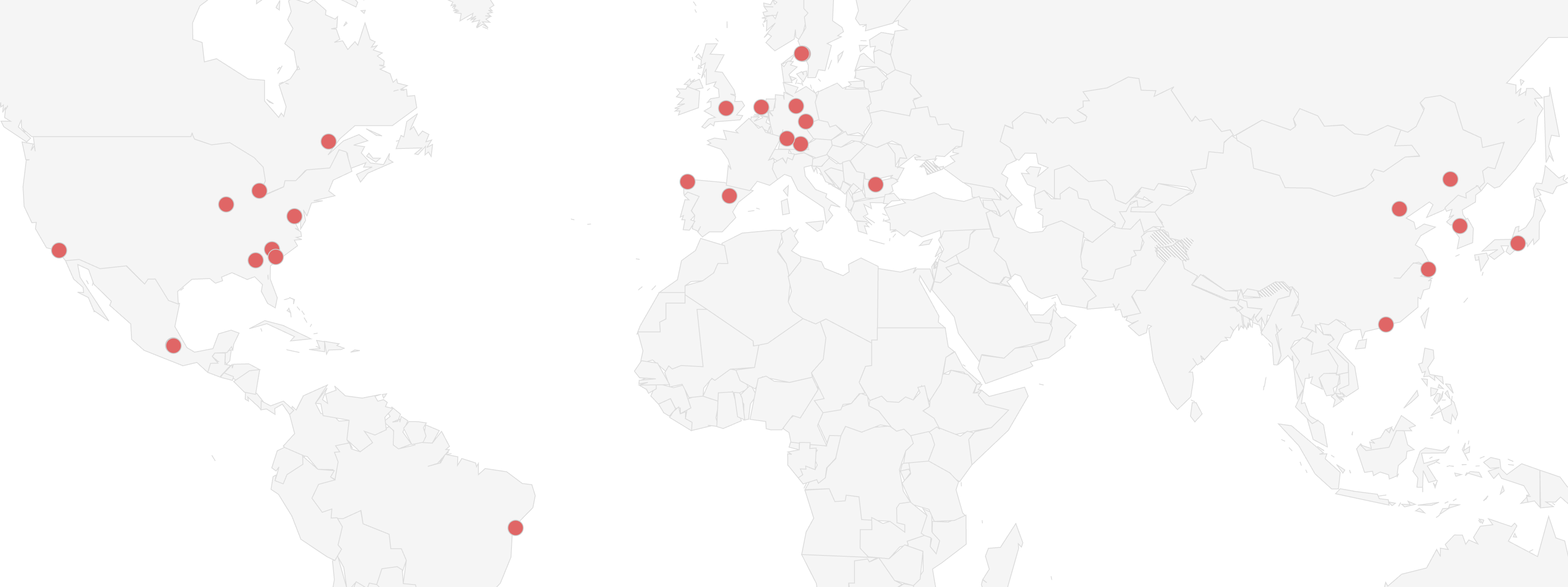
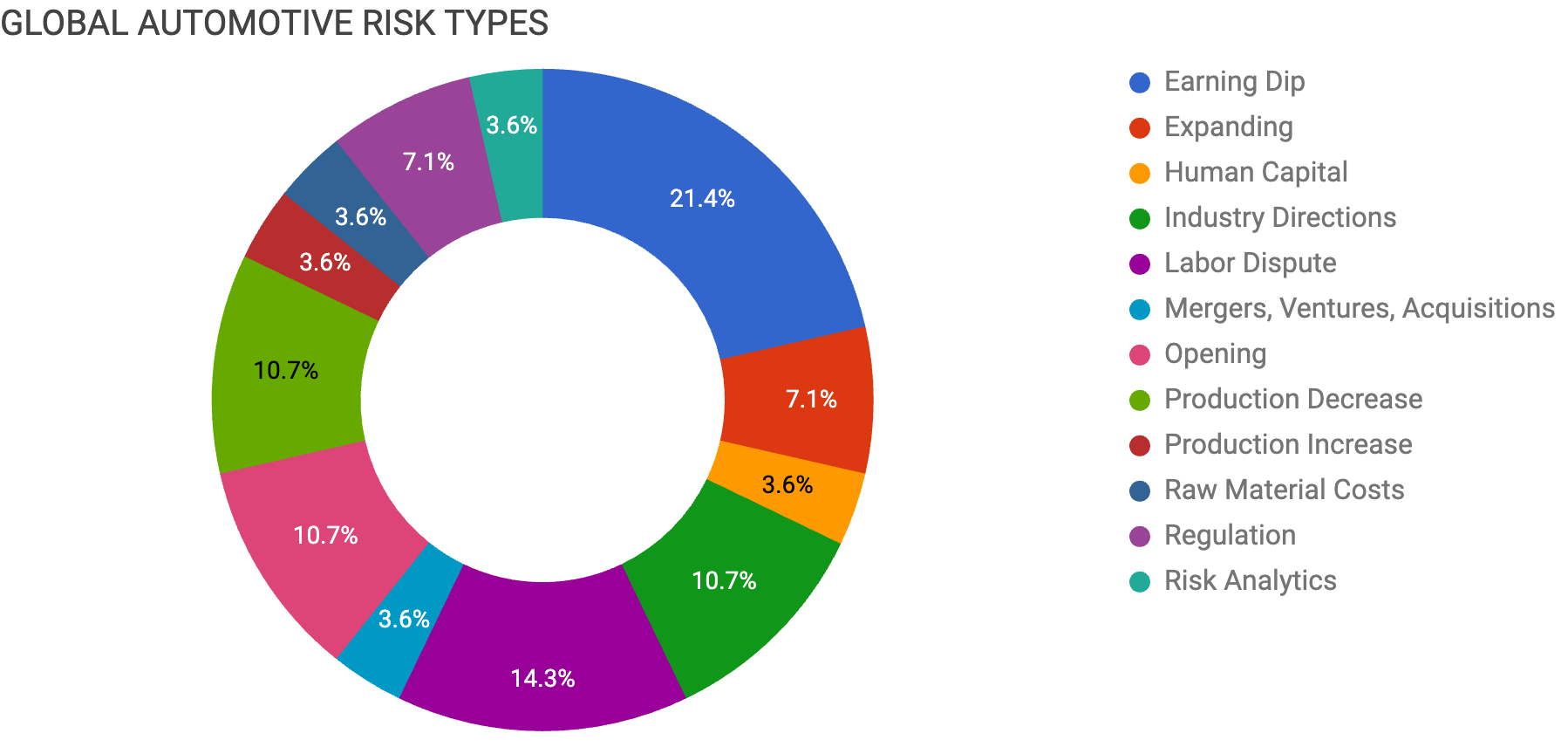
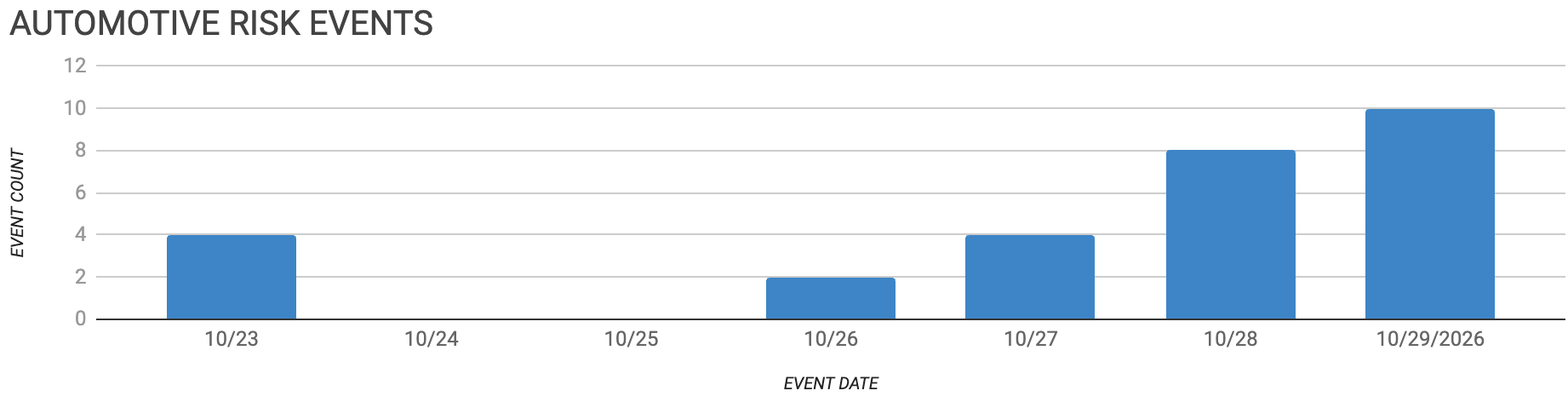
Contents
EARNING DIP
Stellantis burns $4.5B despite operating profit
Volkswagen posts $6.6B quarterly operating loss
Mercedes-Benz car sales fall 8%
Volvo burns $900M, plans 2.5k layoffs
Hyundai lowers sales target to 4.0M
Aston net debt climbs to $2.1B
EXPANDING
Puebla seeks $2.1B from Volkswagen, Audi
BYD seeks doubled Brazilian production capacity
HUMAN CAPITAL
BYD workforce now exceeds 1.02M employees
INDUSTRY DIRECTIONS
Chinese vehicle exports projected at 12M
KPMG survey anticipates Chinese automaker dominance
Stellantis plans European LFP battery switch
LABOR DISPUTE
Los Angeles port watchmen authorize strike
Volkswagen faces German strike threat
Audi’s planned Georgia plant draws resistance
Puebla Volkswagen workers ratify wage deal
MERGERS, VENTURES, ACQUISITIONS
Audi separates Chinese joint venture brands
OPENING
Great Wall plans Bulgarian vehicle production
SAIC’s Spanish factory plan nears approval
Brose Sitech opening Scout seating plant
PRODUCTION DECREASE
Volvo EX60 production trails European orders
Ridgeville XC60 production launch slips
Toyota production declines for third month
PRODUCTION INCREASE
Rivian adds second R2 production shift
RAW MATERIAL COSTS
Ford raises commodity cost forecast
REGULATION
Aluminum tariffs squeeze US metal buyers
Audi receives US tariff relief pledge
RISK ANALYTICS
BMW purchasing changes increase supplier obligations

Earning Dip
Six automakers reported a tough third quarter, and the supply chain signals line up. China is the common thread. Weak demand there forced guidance cuts at Volkswagen and Mercedes, followed by BMW, and roughly halved Volvo’s China revenue. Chinese brands are also gaining market share in Europe, where Stellantis lost money, while Volkswagen is quickly rolling out cheaper EVs. Stoppages also hit output, from battery and parts shortages at Stellantis to strikes at Hyundai and a slow EX60 ramp at Volvo. For suppliers, the risk sits less in the profit lines than in cash and schedules. Stellantis and Volvo both burned cash heavily, and all six are cutting costs or capital spending.
Stellantis 🔗
Burned $4.5B of industrial cash in the quarter even as operating income rose to $287M, though it still targets positive cash flow in 2027.
North America returned to profit at $72M on the Jeep Cherokee hybrid and Ram 1500 Hemi, though revenue there fell 3%.
Europe lost $348M as pricing stayed weak against Chinese brands. Stellantis is counting on Leapmotor and Dongfeng to fill underused European plants.
Four of its five French assembly plants stopped this month to trim dealer stock and because it lacked long-range EV batteries (covered in Issue #502). Other European plants halted production due to parts shortages and weak demand for the Fiat 500 hybrid.
US dealer stock stood at 368k units, or 84 days of supply, at the end of September. The year-end target is 320k to 350k. That implies building below retail sales in the fourth quarter, and North American schedules should reflect it.
Volkswagen 🔗
Posted a $6.6B operating loss, its worst since Dieselgate, on $9.0B in one-off charges led by a Porsche write-down.
The restructuring calls for 100k job cuts across the group and up to four German plant closures, and the finance chief says it must move fast; the labor fight is covered under the Labor section below.
China is still shrinking. VW is cutting jobs and capacity there; its Anhui venture is losing money, with break-even targeted by 2030, and exports from China are rising to offset weak local demand.
VW is speeding up cheaper EVs in Europe to hold share against Chinese brands, which weighs on margins because EVs cost more to build.
Mercedes 🔗
Cut its outlook after core car sales fell 8% in the third quarter on weak China demand.
Blamed higher fourth-quarter costs partly on unnamed materials, as the Iran war strains aluminum and chemical supply. (Ford and GM point to copper and steel, covered below.)
Is cutting administrative and development spending and shrinking its German workforce through voluntary programs.
Is betting on new electric GLC and CLA models and updates to the S-Class, GLE and GLS to revive volume.
Volvo 🔗
Burned about $900M in cash, double the prior year, on a $374M operating loss. Handelsbanken says Volvo may need more capital if that pace lasts two more quarters, though it holds about $3.0B in cash.
Will cut 2.5k more jobs, mostly in Sweden, by mid-2027 through ending consultant contracts, natural attrition, and targeted exit packages. That adds to 3k earlier cuts, plus another $505M in costs to remove.
China revenue roughly halved as Volvo stays out of the price war there. Six of the 13 models due by 2030 will be designed for China.
The EX60 ramp and Volvo’s US production plans are covered under Production Decrease below.
Hyundai 🔗
Lowered its 2026 sales target to 4.0M vehicles from 4.16M after global wholesale volume fell 11% in the quarter.
Strikes intermittently stopped Korean production and shipments before a late-August settlement. Korean sales fell 27%, as Chinese EV makers and Tesla gain share there.
US wholesale fell 9.9% while retail rose 3.5% on hybrids and SUVs. Hyundai shipped less than it sold, drawing down US dealer stock. India was the bright spot, with wholesale up 19%.
Trimmed its 2026 investment plan to $12.0B from $13.3B, citing higher raw material prices.
Aston Martin 🔗
Net debt rose to $2.1B on a $103M pretax loss, even as revenue grew 36% on higher-priced models such as the Valhalla.
Some bondholders are fighting a $733M debt deal with HPS Investment Partners that sidelined them, including discovery requests in US courts.
For suppliers, the number to watch is net debt, not revenue. It has risen again, and Aston has posted about $3.1B in after-tax losses since the last management change.

Expanding
Puebla's state government wants about $2.1B in new investment from Volkswagen and Audi, based on estimates from its economic development office, SEDETRA. About $1B would fund a second phase at Volkswagen's Cuautlancingo plant. About $1.1B would go to Audi's San José Chiapa plant to build more Q5 and Q5 Sportback plug-in hybrids. The state puts the Audi project's expected workforce at more than 5.2k. Puebla takes over combustion Golf production from Wolfsburg in 2027.
BYD is seeking permits to double annual capacity at its Camaçari, Bahia, plant to 600k vehicles as it finishes its stamping, welding and paint shops. (Camaçari is Ford's former Bahia plant, which closed in 2021.) The Brazilian unit aims to source more than 50% of its components locally by 2027. That would qualify it as a local producer, after industry groups complained it leaned on imports and temporarily low tariffs, and open regional exports, starting with orders of 50k units each from Mexico and Argentina. Demand of about 30k vehicles a month already outruns output, which BYD plans to lift to 25k a month by year-end. Investment has passed the planned $1.03B, and the workforce of about 9k should reach 10k by year-end. Meeting the 50% local-content bar means more Brazilian-sourced parts, creating an opening for regional suppliers.

Human Capital
That plant is a small piece of a much larger payroll. BYD now has more than 1.02M employees, chairman Wang Chuanfu said, up about 150k in 10 months even as its vehicle sales fell 3.9% through September. About 960k work in China and 60k abroad, though overseas sales now make up 43% of volume, so BYD still builds nearly everything at home and ships it out. The count includes up to 120k R&D engineers working on cells, motors, electronic controls, and semiconductors. It also includes BYD Electronic's 165k contract manufacturing workers and battery operations that supply other automakers. That vertical integration is why BYD produced about 5.3 vehicles per worker last year, compared with roughly 29 at Toyota.

Industry Directions
China's home market is shrinking while its factories are not. Chinese consumers bought about 22% fewer passenger vehicles through September, and the head of a major industry group expects full-year sales of 18.5M, the weakest since 2014. China has capacity for about 63M light vehicles a year, more than triple expected domestic sales, according to Mobility Global. Prices have fallen by almost a fifth since early 2023, and industry margins hit a multiyear low of 3.6% in the first eight months. Beijing has asked automakers to cut prices less and pay struggling suppliers faster, but local governments that backed 143 EV brands are slow to let them fail. Exports are the outlet, on track for 12M vehicles this year, and Volkswagen wants to cut another 500k units of Chinese capacity after shrinking to about 4M.
Executives still expect China to come out on top. In a KPMG survey of 775 senior auto executives, 48% said six of the world's 10 largest automakers will be headquartered in China by 2035, and 24% called that unlikely. BYD and Geely already rank in the top 10, and Chinese automakers' global share rose to 25% in 2025 from 14% in 2020, according to the Center for Automotive Research. KPMG credits control of raw materials, battery cells, and driver-assistance technology, but expects consolidation among China's more than 140 brands. The US stays closed, with Commerce rules banning Chinese connected-vehicle software from model year 2027 and hardware from 2030.
Stellantis is answering Chinese competition with Chinese chemistry. It will switch many of its European EVs from nickel-manganese-cobalt (NMC) to cheaper lithium iron phosphate (LFP) batteries in 2027, CEO Antonio Filosa said, to stem losses in the region. The International Energy Agency puts LFP cells about 40% below NMC, in part because they use no cobalt. The Fiat 500e is confirmed, and the Peugeot 208, the first model on the new STLA One platform, and the e-3008 are likely candidates. Some cells could come from Stellantis's 50-50 venture with CATL in Zaragoza, Spain, a 50 GWh LFP plant costing up to $4.6B that should start production in late 2026 or early 2027 with about 4k workers.

Labor
A union local representing 250 watchmen at the ports of Los Angeles and Long Beach has voted to authorize a strike, which could start at 5 p.m. PT on Nov. 1 if no deal is reached, the Pacific Maritime Association says. Watchmen make up 2% of the ports’ International Longshore and Warehouse Union workforce, but they cover facilities that handle more than half of the complex’s cargo. Employers expect other dockworkers to honor picket lines, which would halt vessel, yard, and gate operations at six of the 13 container terminals. The watchmen’s contract expired in July 2025, while the main dockworker contract runs to 2028. The complex handled a record 1.06M 20-foot-equivalent containers in September. As of this writing, the Pacific Maritime Association is looking to extend the contract to buy more time to negotiate.
Labor pressure is building in Germany too. IG Metall gave Volkswagen until the end of October to withdraw its termination of almost all German wage agreements and warned that industrial action could follow in the new year. VW is sticking with the terminations, and formal talks begin Nov. 24 at Emden and continue Dec. 15 at Zwickau. The works council says the board also plans to freeze salaries for 660k staff worldwide until 2030, while the restructuring targets $22.4B in cost cuts along the value chain by 2030 plus $12.3B in overhead. The terminated agreements expire Dec. 31, and the strike truce ends Jan. 1, so both bite in January for German VW suppliers.
Audi’s plan for its first US plant has handed IG Metall more leverage. Audi will invest $4B at the Middle Georgia Megasite in Peach County, Georgia, with capacity for up to 200k SUVs a year, an expected workforce of 4.5k, and output from the early 2030s. CEO Gernot Döllner said it will build the Q7, Q8 and Q9, all currently made in Slovakia, and his appearance at a Trump campaign rally drew sharp criticism in Germany. VW’s supervisory board must approve the investment, with labor holding half the seats and Lower Saxony two. The investment comes as VW seeks to cut 100k jobs and possibly close plants, including Audi’s Neckarsulm. Bratislava’s Q7, Q8, and Q9 supply base is exposed when Georgia opens in the early 2030s.
In Mexico, Volkswagen workers at Puebla ratified a 12-month deal worth 8.24%, including a 4.4% wage increase, retroactive to August (Issue #505 covered the tentative deal). Members had rejected two richer offers spread over 18 and 24 months. The agreement clears the way for mass production of the new Golf, and the first four pre-production units were built in September.

Mergers, Ventures, Acquisitions
Audi has split the branding of its two Chinese joint ventures. SAIC Audi will develop, build, and sell vehicles under the all-caps AUDI name and stop selling four-ring models at the end of 2027, while FAW Audi keeps the four rings, including the next generation of combustion models.

Opening
Great Wall Motor (GWM) will build vehicles in Europe at a production base in Lovech, Bulgaria, developed with the Bulgarian Automotive Industry. A production-line retrofit due by the end of 2026 will give the plant capacity for 50k new energy vehicles a year, starting with the ORA 5 in the first quarter of 2027. GWM plans a European industrial park that combines vehicle and component production, and it will develop at least 10 new models for Europe over two years with its Munich R&D center. GWM assembled vehicles near Lovech with Litex Motors from 2012 until that plant stopped work in 2016. The 50k capacity matches that site, though GWM hasn’t said it is the same plant.
SAIC’s planned plant near Ferrol, in Galicia, is nearing approval. Spain’s government is expected to sign off before the Nov. 29 election, and a new conservative government would be expected to do so if it doesn’t. (Issue #485 covered the plan: about 120k MG EVs a year, construction from 2027 and first output in 2028.) Some worry the site will be little more than an assembly plant built to get around EU tariffs on Chinese EVs, and Spain’s former ambassador to China wants technology transfer written into the deal.
Brose Sitech is opening its first US plant, a 140k ft² site in the Scout Motors Supplier Park in Blythewood, South Carolina, that will build complete seat systems for the Scout Traveler SUV and Terra pickup. The plant will need about 330 workers, and Brose Sitech’s North American headquarters in Auburn Hills, Michigan, will handle sales, engineering, and purchasing. Volkswagen, Brose Sitech’s joint venture partner, also owns Scout. Scout still targets initial production in 2027. AutoForecast Solutions projects the Traveler from September 2028 and the Terra from March 2030, so the Blythewood ramp may come later than the announcement implies.

Production Decrease
Volvo's EX60 has more than 50k orders in Europe, but production is not keeping up. Volvo has built only about 5k since output began in April, blaming new manufacturing steps such as the cell-to-body battery structure and its new SPA3 platform. Volvo had expected about 7k US sales this year, and a dealer says it is on pace for a fraction of that, with significantly more inventory due in early 2027. Volvo calls the EX60 one of its most profitable models, so the cash benefit waits on volume.
The US is a harder fix. Volvo says profit there is hard to find, with tariffs, the end of federal EV incentives and consumer sentiment near a 50-year low, and US sales remain 11% behind last year. XC60 production at Ridgeville, South Carolina, now starts in January, a month after the earlier target of early December. The plant can build 150k vehicles a year but makes only about 30k, and the XC60 should lift output by about two-thirds and add at least a full shift. A second model with multiple powertrains will follow by the end of the decade, and US dealers are not expected to receive significant EX60 inventory until the second half of 2027. Volvo will keep sourcing XC60 components from Europe (Issue #494), so local assembly cuts the tariff bill without eliminating it.
Toyota’s global sales fell 2.2% from 889k in September to 860k, and production fell 3.2% to 889k, the third straight monthly decline for both. China was the main drag: sales fell 19.7% for the eighth straight month as higher fuel prices weighed on demand for gasoline and hybrid models, and output fell 18.6%. In the US, Toyota’s largest market, sales rose 8.4% while production slipped 2.9%.

Production Increase
Rivian’s R2 became its best-selling vehicle in its first full quarter, and the company added a second R2 shift at Normal, Illinois. Record deliveries of 19.2k lifted revenue 38%, and Rivian raised its 2026 delivery guidance to 67k to 70k. The car business still lost money at the gross level, with about $120M in R2 ramp costs, though cost per vehicle fell more than $12k from the second quarter. Rivian cut 2026 capital spending by $300M at the midpoint on timing, while Phase 1 of its Georgia plant, which adds 300k units of R2 and R3 capacity, remains under construction. Volkswagen supplied $354M of Rivian’s $605M in software and services revenue, and Rivian holds $7.1B in total liquidity, including a $1B VW term loan. VW’s software payments and its October term loan now prop up both Rivian’s gross profit and its liquidity.

Raw Material Costs
Ford raised its 2026 commodity cost estimate to nearly $2.5B from about $2B, citing the Middle East conflict, copper and steel prices, fuel and chip costs. CFO Sherry House says Novelis has largely recovered from last year’s aluminum plant fires, though a supplier issue stopped F-150 output for nearly a week in September (covered in Issue #502). Ford is running full-size trucks at 55 to 60 days of supply, down from a typical 80 to 100. US tariffs on Canadian steel and autos, now 25%, are set to double on Jan. 1, which a Honda executive called catastrophic, though Reuters reports the two governments are working on a deal. Super Duty production in Ontario is the Ford program most exposed if the Canadian rate doubles on Jan. 1.

Regulation
Aluminum is where that squeeze is sharpest. The 50% US tariff on Canadian aluminum has pushed US prices to a record premium over global benchmarks, though Canada has supplied about 70% of US imports in recent years on cheap hydropower. Rio Tinto’s Saguenay, Quebec, complex ships about 70% of its output to the US and is starting the West’s first new smelters in more than a decade. Canadian shipments to Europe rose 77% through August, and S&P Global expects EU carbon rules to pull more metal across the Atlantic. In the US, the planned $4B Emirates Global Aluminium and Century Aluminum smelter in Inola, Oklahoma, which would more than double primary output, is stalled by a town moratorium and a federal lawsuit. Allison Transmission is among the companies passing higher aluminum costs to customers. If Canadian metal keeps moving to Europe, US buyers lose volume and price. That makes it a parts-availability risk, not just a cost one.
Behind the Audi plant sits a broader promise. The Trump administration told Audi that Commerce will set up a tariff relief program for automakers that invest in US plants, according to people familiar with the talks. The details are still being worked out. Companies would likely get exemptions or offsets on tariffs for imported vehicles or parts, and would have to start building a factory before the end of 2027 to qualify. The model is a Commerce program for polysilicon, where companies submit plans to bring production home and get relief once approved. Audi imports all of its US cars from Mexico and Europe and paid more than $1B in duties last year. The construction-start deadline favors projects already in site preparation. Audi expects grading in Peach County to begin in 2027.

Risk Analytics
BMW’s new purchasing terms for parts and materials take effect Dec. 1, according to law firm Foley & Lardner. Price, warranty length, and late-delivery penalties barely change. The new rules on cybersecurity, export controls, sanctions, audits, and supply chain oversight will add work and cost for many suppliers, and new legal risk if they fall short. BMW has not said whether the terms cover existing purchase orders. Foley suggests suppliers consider objecting if BMW tries to apply them without negotiation.