


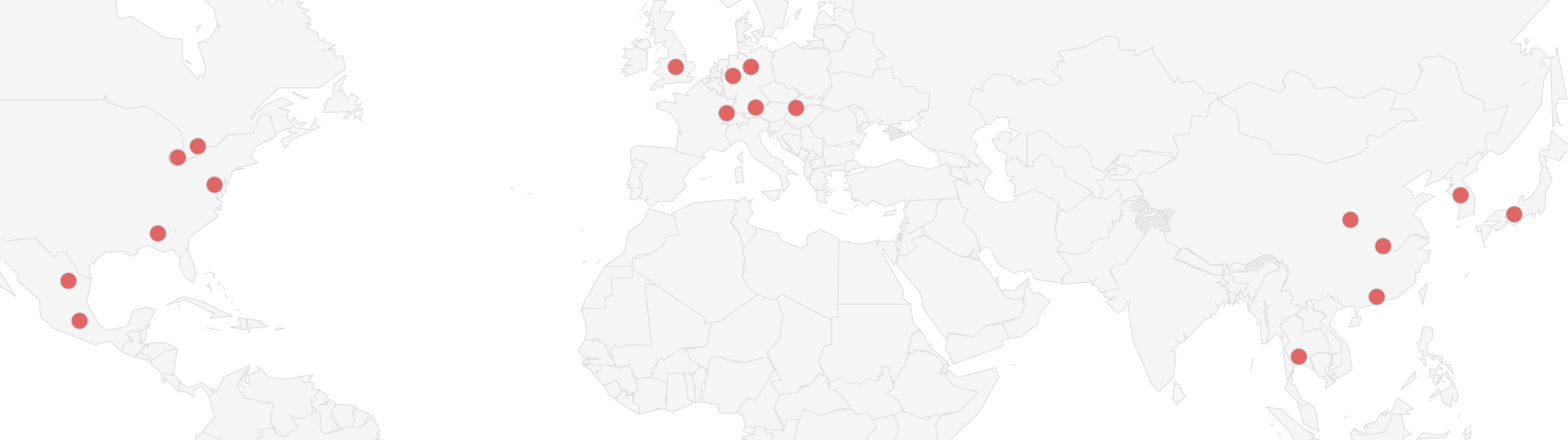
Contents
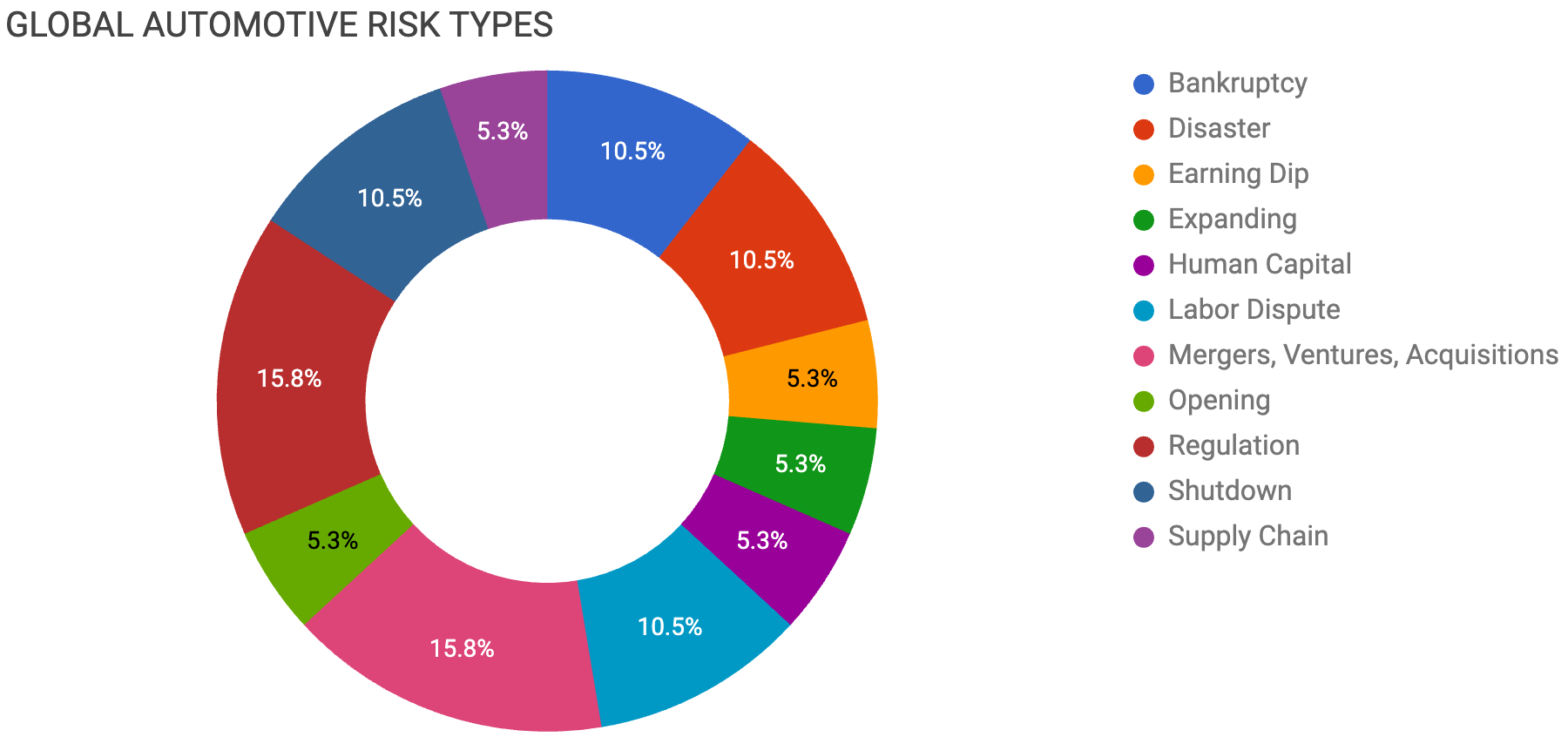
BANKRUPTCY
Prinz enters German insolvency proceedings
Pneuride enters administration, cuts workforce
DISASTER
Thailand floods shut four Toyota plants
Hurricane Polo pauses GM Mexico production
EARNING DIP
Nidec posts loss amid governance issues
EXPANDING
Hyundai expands Alabama powertrain production
HUMAN CAPITAL
Xpeng halves four product lines
LABOR DISPUTE
Stellantis, Unifor deadlock over Brampton plant
Volkswagen faces wage agreement fight
MERGERS, VENTURES, ACQUISITIONS
Gotion, PowerCo exchange battery stakes
OPmobility buys Hyundai Mobis lighting business
OPENING
BYD Xi’an battery plant reaches production
REGULATION
Trump administration lowers 2031 fuel economy
Mexico nears lower US auto tariffs
Sheinbaum customs proposal tightens import valuation
SHUTDOWN
Supplier shortage pauses Ford F-150 production
Battery shortages idle Stellantis French plants
SUPPLY CHAIN
BMW shifts purchasing toward standard parts

Bankruptcy
German precision tube maker Prinz & Co. GmbH Stahlrohre, the core of the family-owned Prinz-Mayweg group in Wickede, entered preliminary insolvency proceedings. Founded in 1896, it makes tubes for seats, dashboard cross-car beams, steering, locking systems, tubular frames and shock absorbers. Statements attributed to the provisional administrator in German reporting point to tight liquidity, higher raw material and energy prices, high fixed costs and a sharp drop in revenue over the summer. The pattern is broad. German parts makers cut 7.6% of their jobs in the year to mid-2026, against 6.1% at automakers, according to Destatis. The plant can keep running, and a public insolvency benefit covers wages for up to three months. That is the window for a buyer to appear or for customers to qualify a second source for safety parts built under IATF 16949. Prinz is one of three German suppliers, with Paragon and Schüle, to enter insolvency proceedings in September.
Suspension work is also under pressure in the UK. Coventry-based Pneuride, which designed and made air suspension components and electronic control systems for the auto industry, entered administration on Sept. 30, with most of its remaining 55 staff made redundant. It previously traded as Dunlop Systems and Components.

Disaster
Flooding in Thailand has shut four Toyota plants after floodwater disrupted parts deliveries. Thai Airways has suspended all cargo flights through Oct. 6 because many staff cannot get to work. Bangkok was declared a disaster zone after 12.6 inches of rain in three days, about a normal September's total. The prime minister says Bangkok and the central region remain at risk from water flowing in from the north, and heavy rain is forecast for Oct. 5 to 8. The Bank of Thailand says manufacturing has not yet been broadly hit. The 2011 Thai floods cut Japanese automakers' output as far away as North America due to parts shortages, so next week's rain in the northern and central regions may matter more than the Bangkok cleanup.
Weather also cost GM a day of output in Mexico. GM suspended production at its Ramos Arizpe assembly plant in Coahuila on Sept. 28 due to disruptions linked to Hurricane Polo, which hit Baja California Sur ahead of a forecast second landfall in southern Sonora. Ford’s Hermosillo plant, which builds the Bronco Sport and Maverick, is also in Sonora, and no disruption has been reported there.

Earning Dip
Nidec swung to a $3.59B net loss for the fiscal year ended March after a $4B impairment, citing a weaker EV motor business and heavy competition in Chinese appliance motors. Auditor PwC Japan declined to give an opinion because some staff involved in earlier accounting irregularities still hold financial reporting roles. An independent report in September also found falsified and fabricated test and inspection results. The Tokyo Stock Exchange has warned Nidec that it risks delisting without better internal controls. CEO Mitsuya Kishida resigned over his conduct in financial reporting, and Chief Technology Officer Michio has taken over.

Expanding
Hyundai will invest about $500M in its Alabama operations to build new engines and an extended-range electric vehicle (EREV) powertrain, CEO José Muñoz said. The money also moves Tucson Hybrid assembly from Korea to Alabama, avoiding some US tariffs, with the Santa Fe to follow. Hybrids made up a record 29% of Hyundai's US sales in August. The company is targeting 80% localized sourcing and 500k units of additional North American capacity by 2030, and plans to expand its US supplier footprint. Localizing engines and the EREV powertrain, not just assembly, is what makes the 80% local sourcing target reachable, and it is where new US supplier awards would come from.

Human Capital
Xpeng has merged its four internal product lines into two to focus R&D spending and cut costs, according to the local outlet 36Kr, which cites industry sources. The Mona series keeps its own line, and everything else, including overseas products, now sits under the G line. Deliveries fell 10.5% in the first eight months, while second-quarter R&D spending rose 32% to $432M and the net loss widened to $199M. Xpeng still targets more than 60k monthly deliveries in the fourth quarter, about 53% above its August level.

Labor
Stellantis and Unifor remain deadlocked over the Brampton Assembly Plant after the union's contract covering about 9k Canadian workers expired Sept. 20. Unifor President Lana Payne says Stellantis has made a closure agreement for Brampton, which it plans to sell to defense contractor Roshel, a condition of any wider pattern deal. Stellantis would not say whether the two are linked. Industry Minister Mélanie Joly said Sept. 18 the plant must reopen, or Ottawa will want its money back, but she did not commit to blocking the sale. A strike is not imminent, since Unifor must first finish conciliation and hold strike votes. If Payne's account holds, the pattern deal and Brampton are now one negotiation, tying Windsor's strike risk to a plant that has not built a vehicle since 2023.
Volkswagen is heading for its own labor fight. It plans to terminate several collective wage agreements effective Dec. 31, citing price pressure and tougher competition. IG Metall says it will not accept the move and accuses management of mixing commitments from the 2024 deal with the 2026/2027 bargaining round now starting. The two sides meet again in the second half of October. Issue 500 noted that the union cannot strike before year-end, the same date these terminations take effect, so early 2027 is the window to watch.

Mergers, Ventures, Acquisitions
China's Gotion will invest $1.25B for a 49% stake in PowerCo's Valencia plant in Spain. The Volkswagen battery unit will become a European hub for lithium iron phosphate (LFP) batteries. In return, PowerCo will invest about $534M for a 49% stake in Gotion's cell plant in Šurany, Slovakia, and in a new cathode material plant in Kenitra, Morocco. Chinese companies are expanding in Europe ahead of expected EU moves to shield local industry from cheaper imports. The cross-stakes give VW Chinese LFP capacity in Spain and give Gotion a European footprint inside any EU trade wall before it goes up.
French supplier OPmobility has agreed to buy Hyundai Mobis's lighting business for $443M, with closing targeted for the second half of 2027. The unit had 2025 revenue of about $1.85B, a positive operating margin, and runs five plants in South Korea, China, Mexico, and the Czech Republic. The deal extends OPmobility's push into North America and Asia to offset weakness in Europe.

Opening
BYD has brought its Chinese battery plant in Xi’an’s Xixian New Area into full production. The site runs the full process from electrode preparation to cell, pack and system testing, and is now the core base for BYD’s second-generation Blade Battery and local supply for its Xi’an vehicle plants. BYD has broken ground on an EV components plant in the same park, and more than 40 suppliers have set up around it.

Regulation
The Trump administration has finalized a rollback of federal fuel economy rules, cutting the required fleet average from 50.4 miles per gallon under the Biden-era standard to 34.5 by model year 2031. The rule covers passenger cars and light trucks for model years 2022 to 2031. It reclassifies small SUVs and crossovers as passenger cars and ends credit trading between automakers, a revenue source for Tesla. GM, Ford, and Toyota backed the change. With fines already eliminated, the rule mostly codifies where product plans had moved, extending the runway for combustion content and weakening regulatory pull for efficiency and EV components.
Mexico is moving closer to a deal that would cut US tariffs on its light vehicles from 25% to 15%, according to Mexican officials who asked not to be named. Because the rate applies only to non-US content, they expect the effective tariff would be 10% to 12%. The US offered Canada a 15% rate that could effectively fall to about 7%, and that deal fell apart at the last minute in August. Officials also expect relief from steel and aluminum tariffs of up to 50%, though the size is unclear and nothing is final.
Mexico’s own border may get harder to cross. President Claudia Sheinbaum has proposed changes to customs law to address undervalued imports, expanding authorities’ power to inspect and seize goods based on their declared value. The bill removes a 50% undervaluation threshold for precautionary seizure in some cases and cuts the threshold for presuming an infraction to 20% from 50% for goods with deferred duties. The Mexican Automotive Industry Association (AMIA) warns that seizing components during valuation disputes could disrupt just-in-time production. A committee vote could come next week, and the law would take effect the day after publication.

Shutdown
Ford says a supplier’s component shortage halted F-150 production for about a week at its Dearborn, Michigan Truck Plant, cutting third-quarter wholesale deliveries. CEO Jim Farley says a supply chain team fixed the problem quickly and fourth-quarter output should not suffer. Ford still plans to build 150k more trucks this year than in 2025, when fires at a key aluminum supplier cut output.
Supplier shortfalls are also idling Stellantis plants in France. Sochaux, which builds the Peugeot 3008 and 5008, will stop production Oct. 23 to 30, and Rennes, which builds the Citroën C5 Aircross, will stop production Oct. 22 to 30, both due to a lack of long-range EV batteries. Stellantis says demand, especially from fleets, has outrun supply from Automotive Cells Co. (ACC), its venture with Mercedes and TotalEnergies. EV demand has picked up this year on high fuel prices since the Iran war began. ACC says September module output nearly matched its 2025 total and that it is meeting its commitments. Mulhouse stops Oct. 15 to 30 for unrelated reasons, and Mirafiori in Turin faces a two-week halt in late October after stoppages the company blamed on engine parts and unions blamed on weak Fiat 500 demand. Keep in mind that ACC shelved its Italian and German plants when EV demand looked weak, and this shortfall is the cost of sizing battery capacity to the dip.

Supply Chain
BMW will shift more of its roughly $91B annual purchasing budget to generic "industry best offer" parts, which will overtake bespoke components by 2032 as the bespoke share is more than halved. BMW calls the move a key lever toward its target of 3% to 5% automotive margins by 2028, up from 2.3%. Chinese automakers have used standard parts to reach scale at low cost, and Ford is doing the same. Ford of Europe head Jim Baumbick says a new headlamp design can add three months to a program. Nissan described the same move on headlights in Issue 501. For suppliers, the shift rewards catalog parts sold across automakers and squeezes the engineering premium on bespoke work.
There is an emerging possibility of a 'powertrain' tech split between US and ROW markets, led by Europe. With Europe heading towards a, within EU borders, China EV and battery/hybrid supply chain, and the USA heading back to the Henry Ford era (sorry, I'm kinda joking, poor taste, I know).
It is very obviously not by design in Europe, after all European automotive leaders and politicians allowed themselves to give away the industrial family silver to China and kowtowed to the US' role-back on Sustainability and EV's, leaving themselves stranded with no discernible, policies, strategy, or design teams.
And now, whether anyone wants to admit the Middle East issue is a root cause or not, there is an energy crisis that will take years to resolve, coupled with a self-annihilating US trade war against, well anyone and everyone, amd these are forcing the market position for the ROW markets, even if by osmosis.
I like the notion of the BMW general parts procurement strategy. If you are a European SME, this is a fascinating procurement scenario. Make sure your QM System & Strategy target Cost, Sustainability, and Resilient short supply chains and there may be a lot to gain. If you do not agree, China will be able to show you how.