Contents
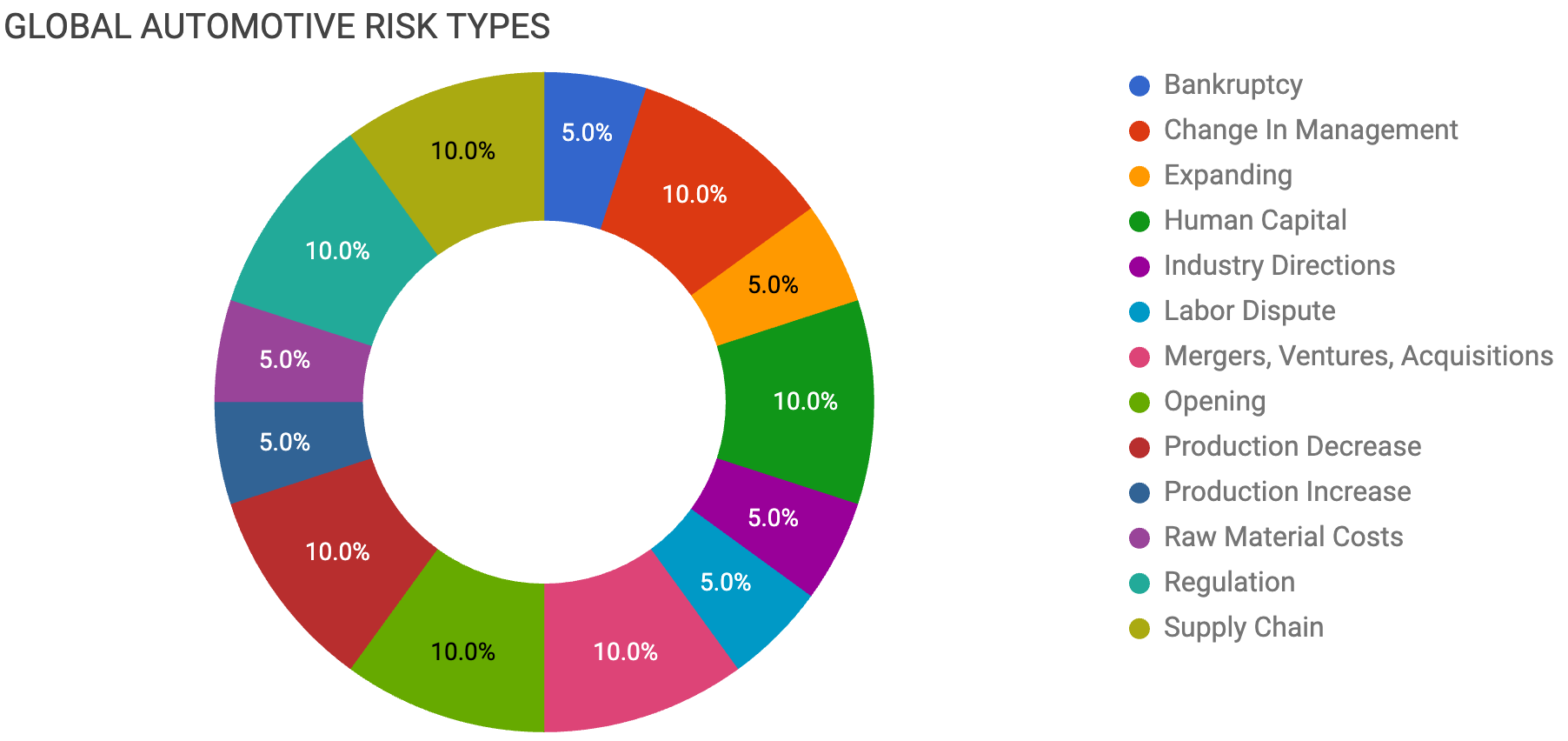
BANKRUPTCY
Julius Schüle enters protective proceedings
CHANGE IN MANAGEMENT
Volvo names Skoda’s Zellmer future CEO
Skoda shifts under tighter VW control
EXPANDING
GAC seeks more European production capacity
HUMAN CAPITAL
BYD adds 8k workers at Xi’an hub
Mercedes seeks $911M German labor savings
INDUSTRY DIRECTIONS
Automakers diversify battery sourcing beyond CATL
LABOR DISPUTE
German auto workers protest at 280 locations
MERGERS, VENTURES, ACQUISITIONS
Nexperia shifts MOSFET production to Tata
Toyota targets 400k robots from 2028
OPENING
Toyoda Gosei plans $60M Maharashtra plant
Honda considers $2.5B central Ohio hybrid plant
PRODUCTION DECREASE
Nissan cuts Mexican output and footprint
Stellantis delays extended-range vehicle launches
PRODUCTION INCREASE
CATL starts Hungary trial cell production
RAW MATERIAL COSTS
Higher input costs squeeze Chinese EVs
REGULATION
Senators delay Chinese vehicle ban push
US-China truce extends to January 2027
SUPPLY CHAIN
Rare earth dependence remains unresolved
GM begins domestic magnet supply transition

Bankruptcy
German die-caster Julius Schüle Druckguss has entered self-administered protective shield proceedings, ordered Sept. 18 by the Aalen District Court. The filing covers only the German parent in Schwäbisch Gmünd, where 152 of the group's roughly 680 employees work, and the subsidiaries in Poland and Slovakia have not filed. The family-owned company makes complex die-cast aluminum parts for automotive and heating systems and had 2025 revenue of about $126M. It blames low-wage competition, overcapacity, and falling auto volumes and margins. It is operating as normal while it seeks an investor. The filing follows Paragon AG's insolvency earlier in September, which affects more than 500 workers at six German plants.

Change In Management
Volvo Cars has named Skoda CEO Klaus Zellmer to succeed Hakan Samuelsson as president and CEO no later than Oct. 1, 2027. The Geely-majority-owned automaker has missed profit targets due to tariffs, weaker EV demand, and high development costs, and sales remain under pressure in the US and China. To blunt tariffs, Volvo is moving the hybrid XC60 to South Carolina and ramping EX30 output in Belgium. Zellmer also inherits a plan for 13 new models by 2030 and the growing task of separating Volvo's Western and Chinese technology to keep selling in the US, where sister brand Polestar faces a sales ban.
Zellmer's exit is also speeding Volkswagen Group's plan to bring Skoda under central control. CFO Holger Peters becomes interim CEO, and an internal successor looks unlikely after several senior executives moved to the group. Procurement chief Karsten Schnake has transferred to Wolfsburg, and the production board seat has been abolished, leaving Skoda with a three-member board from Oct. 1. The changes fold Skoda more deeply into VW's Brand Group Core, which centralizes purchasing and technology across VW, Skoda, Seat/Cupra, and VW Commercial Vehicles. The detail for suppliers is procurement. Sourcing decisions for Skoda programs now sit in Wolfsburg rather than Mladá Boleslav.

Expanding
Guangzhou Automobile Group is looking to add European production capacity, both with contract builder Magna and with other investors, to support a large-scale rollout in markets such as France. Magna already builds GAC vehicles for Europe. GAC plans to offer 12 electric and hybrid models in France by 2030 and has expanded into Finland, Greece, Poland, Portugal, Spain, and the UK. Demand is on its side for now. EVs accounted for a record 35% and 38% of French new car registrations in July and August, respectively, boosted by higher fuel prices tied to the Iran war.

Human Capital
Chinese exports are also reshaping labor at home. BYD is recruiting more than 8k workers across several plants at its Xi'an hub, its largest, with annual capacity of 1.5M vehicles. Skilled welding, painting, and final assembly jobs make up a large share, with signing bonuses up to $889 and monthly pay up to about $1.5k. The hub cut staff in the first half when the switch to second-generation Blade Battery and line upgrades held back output, but all four Xi'an sites are back on normal schedules. BYD's overseas sales rose 134.5% to a record 189k in August while domestic sales fell 14.3%. Export demand is doing the hiring, which ties the ramp's staying power to tariff and localization decisions in destination markets.
German labor is moving the other way. Mercedes-Benz plans to cut $911M in German labor costs, WirtschaftsWoche reported Sept. 24, with options including longer hours without extra pay, smaller holiday and Christmas bonuses, or ending special payments. Mercedes declined to comment. Two days earlier, production chief Michael Schiebe told workers at Sindelfingen that building cars in Germany is too expensive and two German plants could close without cost cuts. He did not say which.

Industry Directions
Gasgoo: Automakers' Supply Chain Balancing Act: Signing with "CATL" While Cultivating "Backups"
Analysis of how Chinese automakers are reshaping battery sourcing around CATL rather than away from it. Worth a read for purchasing and risk teams. It maps a three-track model: CATL keeps premium programs, volume models move to multi-supplier setups with CALB, Sunwoda, Gotion, and SVOLT, and automakers take over battery specs and quality control, with Xiaomi placing its own quality staff inside supplier plants. The shift moves the power to set battery standards from cell makers to automakers.

Labor
Mercedes staff were among the workers from VW, BMW, Audi, Porsche, and major suppliers who IG Metall called out to protest at more than 280 events across Germany on Sept. 21. The union wants plant and job guarantees, lower energy costs, and protection from low-cost imports. The protests followed VW's Sept. 18 cut to its operating-margin forecast, to no more than 1% from at least 4%, citing China, restructuring costs, and a $6.9B write-down tied to Porsche. Suppliers have taken the deeper cuts. They shed about 74k jobs from 2019 to 2025, almost a quarter of their workforce, according to the VDA.

Mergers, Ventures, Acquisitions
Dutch chipmaker Nexperia will make MOSFETs at Tata Electronics' wafer fab in Dholera, Gujarat, and handle assembly and testing at Tata's plant in Jagiroad, Assam. It is Nexperia's second manufacturing partnership outside China, after Polar Semiconductor in Minnesota. The low-cost transistors control fuel injection and ignition in combustion vehicles and manage power flow between battery and motor in EVs. Nexperia has lost control of its China operations, where it did much of its testing and packaging, and an Aug. 28 court ruling in Dongguan froze all its Chinese business assets through August 2029. With no production timeline disclosed, India is a medium-term hedge, not relief for current MOSFET supply.
Toyota Group will invest $6.4B a year from 2028 to modernize its factories and deploy 400k robots worldwide, including AI-powered humanoids trained to copy the skills of its master craftsmen. The count covers 150k robots at Toyota Motor and 250k at group companies such as Denso and Aisin. Workers train the humanoids by wearing exoskeletons that relay their movements, and Toyota says the robots will support, not replace, its 18k master craftsmen across 60 factories. Most of the deployment sits in the Tier 1 base, putting much of the capital burden and skills transition on suppliers like Denso and Aisin.

Opening
Group suppliers are also following Toyota's capacity. Toyoda Gosei's local unit will build a roughly $60M plant in Maharashtra, India, to make bumpers, airbags and other parts. Output is slated to begin as early as the first half of 2029, around the time Toyota expects to open its own new plant in the state. Construction begins this year, and staffing should reach about 570 by 2030. It will be Toyoda Gosei's eighth production and development site in India, where it aims to lift revenue by 60% between 2025 and 2030 from $326M in fiscal 2025.
Honda is in the final stages of talks on a hybrid assembly plant worth up to $2.5B, with Ohio the clear front-runner, Nikkei reported. A person briefed on the plans told Automotive News the plant would be located in central Ohio, near Honda's Marysville and East Liberty plants and its supplier base, with an annual capacity of about 250k. That would lift Honda's North American capacity to about 2M. The plant is expected to begin building the next-generation Acura MDX in the third quarter of 2030, alongside new three-row Honda and Acura flagship crossovers. Honda says it has made no decision and calls the reports speculative. CEO Toshihiro Mibe said in July that its North American plants run near full capacity, adding, "If you don't have a buffer, you can't recover production."

Production Decrease
Nissan is moving in the opposite direction in Mexico. It built 341k vehicles there from January to May, down 25.1% from the same period last year, after closing two plants. The CIVAC plant in Cuernavaca, Nissan's first plant outside Japan, shut on March 27, and NP300 Frontier pickup output moved to Aguascalientes, which will now also supply Latin American markets such as Argentina after local assembly in Córdoba ended. The COMPAS joint venture with Daimler in Aguascalientes, which built the Infiniti QX50 and QX55, has also ended operations.
The footprint cuts come with a component cost program. A 3k-employee task force found about 1.6k workable ideas, several in use since late 2025. Nissan is cutting headrest variants, which halved the supplier warehouse space needed to store them. It is also moving some headlights to generic optics suppliers already used by other automakers, dropping anti-fade fabric dyes, and pre-assembling more parts before shipment to reduce freight costs. Each cost idea maps to a supplier tier, shifting volume and work content across seating, lighting, and textiles.
Stellantis has pushed the start of Jeep Grand Wagoneer extended-range production at Warren Truck Assembly to November, about six months later than planned, according to a memo to suppliers. The Ram 1500 REV extended-range pickup for Stellantis Sterling Heights Assembly Plant, which builds the Ram 1500, slips further to mid-April 2027. Supplier sources say the issue is the shared powertrain: a 400-volt battery and electric motor with a Pentastar engine as the on-board generator, which ties the two programs' timelines together. Stellantis does not call it a delay and says the Grand Wagoneer will still launch in 2026. Suppliers to both programs now carry tooling and launch costs without matching volume for six to ten months.

Production Increase
CATL began trial cell production at its Debrecen, Hungary, plant on Sept. 22, with its first two lines running to set up and validate equipment and processes ahead of mass production. The site will reach 100 GWh, making it CATL's largest production base outside China. It has built battery modules since fall 2024, 537k to date. Cell output comes later than the late 2025 or early 2026 start CATL targeted a year ago, and final permits came only after repeated inspections over residents' concerns. No mass-production date was given, so European customers should not count on Debrecen cells in near-term volume plans.

Raw Material Costs
Rising costs for memory chips and lithium iron phosphate forced Leapmotor to cut its full-year net profit target to about $438M from $730M, even as it became the first Chinese EV startup to top 100k monthly deliveries. NIO said per-vehicle costs rose about $2k in the second quarter. The squeeze is industrywide. China's vehicle manufacturing margin was 1.5% from January to May, the lowest in a decade, according to CAAM, as first-half domestic sales fell by 21.1% while exports rose by 65.3% to 5.1M units. Li Auto says it will not pass cost increases to consumers, and costs that OEMs refuse to pass downstream tend to move upstream to suppliers.

Regulation
Senators Bernie Moreno and Elissa Slotkin delayed a fast-track bid for a permanent ban on Chinese vehicles until next week to win over lone holdout Rand Paul. The delay came on the day President Trump met Xi Jinping in Washington, weeks after Trump said he would accept Chinese automakers building cars in the US. The bill would write into law the Biden-era rule that effectively bars Chinese automakers from selling or building passenger vehicles in the US, and would block White House waivers. Senator Ted Cruz said it would bar companies with more than 15% Chinese ownership, which could catch Mercedes-Benz, where Chinese investors hold nearly 20%. Moreno said Mercedes would have until 2030 to comply and could still get waivers. The source names only Mercedes, but Volvo Cars is majority-owned by Geely Holding and would appear to sit well above the 15% threshold, the same week it named a new CEO and moved XC60 production to South Carolina.
The summit also produced a truce extension. Treasury Secretary Scott Bessent said the US and China will extend their trade truce, due to expire Nov. 10, by two months to Jan. 10, 2027, though the White House has yet to document it. Under the truce, China paused rare earth export controls and suspended retaliatory tariffs. The US cut fentanyl-related tariffs on Chinese goods to 10% after they were struck down by the Supreme Court and suspended a Section 301 probe into China’s maritime and logistics sectors. Bessent said he was unsure whether a bigger deal could land by the new deadline.

Supply Chain
The rare earth pause is the piece automakers need most. US output of the two most-used rare earths has more than tripled since Trump returned to office, but the country meets only 42% of its demand and will still import nearly a quarter of its demand in five years, according to Benchmark Mineral Intelligence. It processes hardly any heavy rare earths. That makes the White House's own January 2027 deadline to block Chinese rare earth imports all but impossible to meet. Some Chinese suppliers have already started holding back US shipments for fear of offending Beijing, and Ford briefly shut US plants last year when Chinese supply dried up.
GM shows how long the alternative takes. It signed a long-term deal with MP Materials in 2021 after the pandemic and chip shortage pushed it toward a "buy where you build" sourcing strategy. MP owns Mountain Pass in California, the only operating rare earth mine and processing site in the Americas. It began producing rare earth metals for GM at its 250k ft² Fort Worth, Texas, plant in 2024 and magnets in 2025. Reuters reports that MP began delivering magnets to GM earlier this month, while Automotive News reports that GM is preparing to take its first deliveries. GM plans to make MP its primary source of EV traction motor magnets in North America, and MP is building a larger second site in Northlake, Texas. Five years from contract to first automotive magnet is the benchmark for anyone assuming non-Chinese magnet supply can be stood up quickly.