


Dear Reader,
Five hundred issues. We have put this in your inbox every week for close to a decade, and looking back, the thing that strikes me is how rarely the story is actually new. The names change. The order rarely does. Demand softens, capacity comes out, and the supply base absorbs the difference.
This week is a good example. Capacity is being removed in three places at once. Volkswagen looks ready to retire Seat, Stellantis wants to hand Brampton to a defense contractor, and GAC and FAW have found a way to shrink Chinese JV capacity without either state parent losing face. Three countries, three sets of politics, one decision: shed capacity that demand no longer supports. Each found a version its own government and unions could live with.
At the same time, capacity is going in, and it is going exactly where trade policy demands it. A $5.8B steel mill in Louisiana. Driveline machining moving from South Korea to Macomb County. A Chinese electric SUV that becomes a Spanish electric SUV the minute it is built on a Stellantis line in Zaragoza. None of that is about demand. It is about where something has to be made to be affordable.
Five hundred issues in, the scarcest thing in this business is not capacity or parts. It is the attention to notice what is happening to either one. Thank you for giving some of it to this.
Warmly,
Nick Gaydos
Editor
Contents
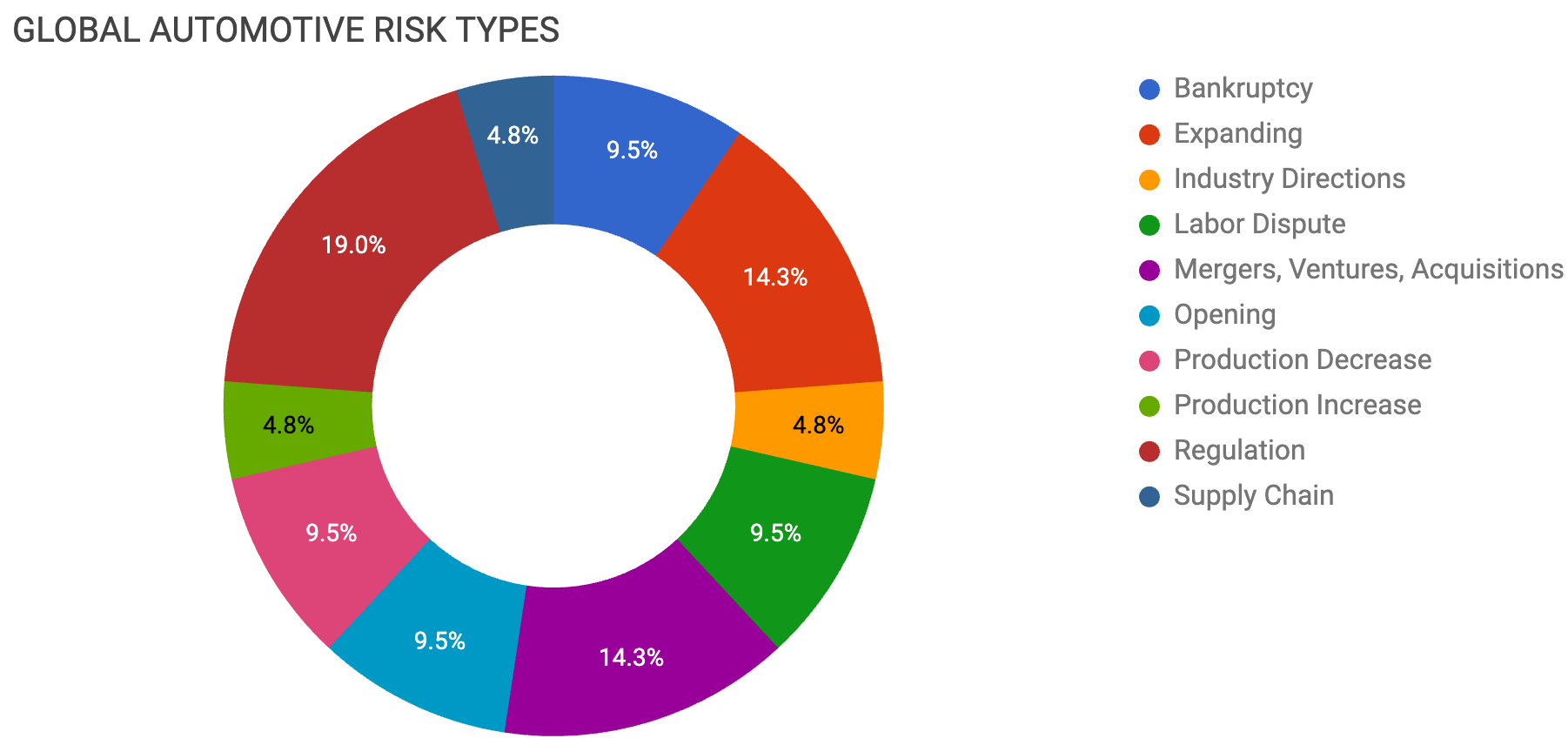
BANKRUPTCY
Neta restructuring funds SUV restart
Lucid completes restructuring adviser work
EXPANDING
Nissan targets 2027 Sunderland Kicks launch
Renault Geely deepen Brazilian manufacturing investment
Hansae expands Michigan driveline manufacturing
INDUSTRY DIRECTIONS
Volkswagen signals Seat phaseout toward Cupra
LABOR DISPUTE
IG Metall reopens Volkswagen labor talks
Unifor strike threat grows at Stellantis
MERGERS, VENTURES, ACQUISITIONS
Brampton sale would cut Stellantis capacity
GAC FAW pursue Toyota JV consolidation
Forvia weighs Clarion sale for debt
OPENING
Hyundai Posco breaks ground in Louisiana
BYD plans four European factories
PRODUCTION DECREASE
Toyota delays Highlander EV to 2027
Acura shelves MDX Type S
PRODUCTION INCREASE
Leapmotor begins European B10 production
REGULATION
EU seeks cap on Chinese hybrids
US Mexico pursue interim trade deal
China targets 70% electrified sales
Canada opens limited market to China
SUPPLY CHAIN
Rhine lows squeeze European freight costs

Bankruptcy
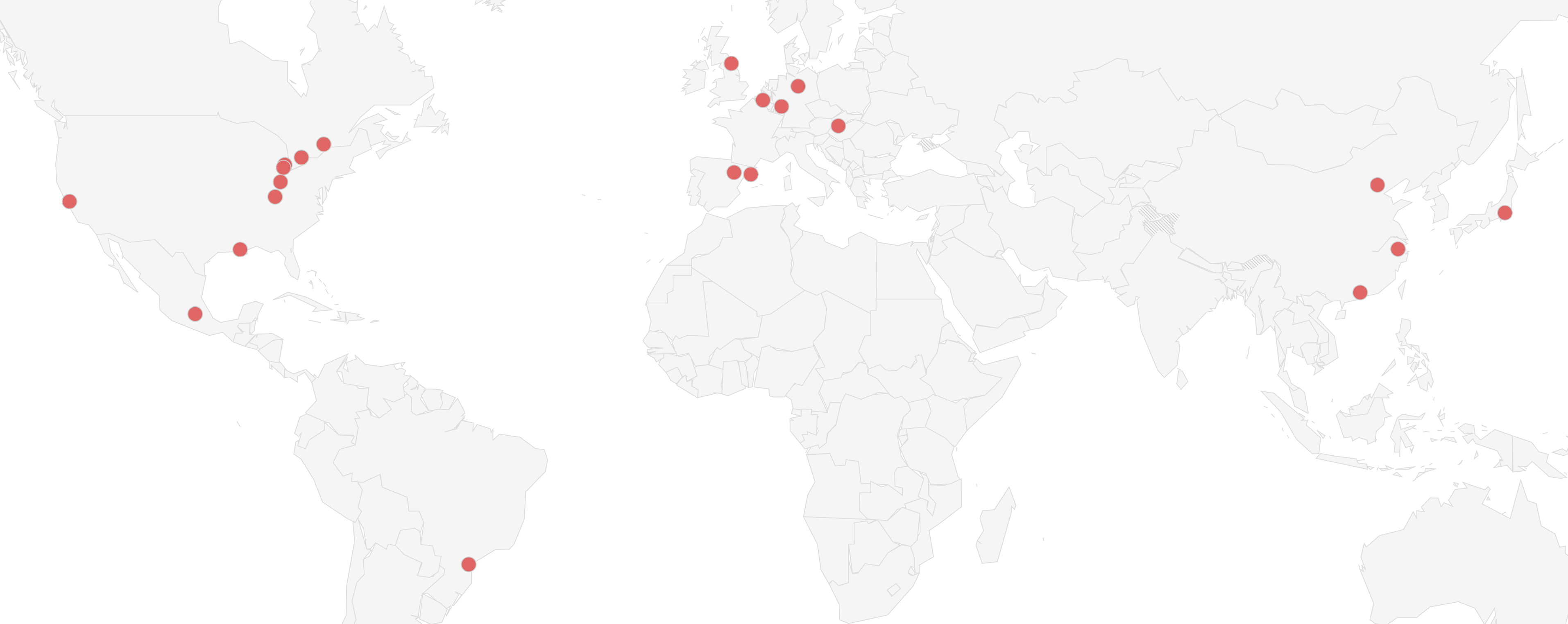
Zhejiang Taiyi Shenglian will inject about $438M into Hozon New Energy, the parent of Neta Auto, for roughly 70% of the equity and control of the reorganized company. Creditors and a court must still approve the draft plan. About $268M of that money is working capital earmarked to restart production, rebuild the supply chain, and repair the dealer network, while the other $170M covers debts and restructuring costs. Tooling for the Neta X and Neta L will remain, while tooling for the Neta S and GT will be sold off, as Neta will focus only on building SUVs. The first phase targets 10k Neta X units a year, mostly for export. Chinese Tier 2 and Tier 3 suppliers are being asked to ship again to a customer that just wrote down its receivables, and a 10k-unit target gives them almost nothing to recover on.

On the other side of the pond, Lucid's chief executive said the electric vehicle maker has wrapped up its work with restructuring advisers on cost cuts and cash flow.

Expanding
Nissan is investing $229M to build the Kicks small SUV with its e-Power hybrid drivetrain at its Sunderland, England, plant. The Kicks replaces the combustion Juke, costs less to build, and is expected in 2027. The Juke name moves to a compact SUV EV that Sunderland also starts building in 2027. Nissan has already ended production on one of the plant's two lines and has a nonbinding agreement with Chery to take over the other line, which is not final. Two 2027 launches on one line and an unresolved handover of the other leave the Sunderland supply base planning against an unsettled footprint.
Renault and Geely will put another $371M into their Brazilian JV, taking their combined 2025 to 2027 investment to roughly $1.05B. The deal hands Geely an existing plant and dealer network and lets Renault fill spare assembly capacity and add larger models. Renault's Hybrid E-Tech 4x4 flex-fuel powertrain enters production in Brazil in 2027. Geely gains Brazilian capacity without building it, which is the same route Chinese automakers are now taking into Europe.
Hansae Mobility USA will spend more than $93M on a 400k ft² plant in Chesterfield Township, Michigan, adding 102 workers to the existing 171. The subsidiary of South Korea's Hansae Mobility builds driveline systems and other components, and the new site puts assembly and machining under one roof to cut transport costs. Some of that machining work is moving from South Korea to Michigan, likely due to tariffs.

Industry Directions
Volkswagen's restructuring looks set to end Seat. The company says it is still evaluating the Barcelona brand's future beyond the current product cycle, and someone involved in the talks said all future products will go to Cupra, as Seat's combustion models are being phased out. Seat has not launched a model since 2020, has no BEV models planned, and was just 3% of VW's 2025 deliveries.

Labor
On the labor side of the same overhaul, IG Metall invoked a clause in Volkswagen's December 2024 contract to resume talks with management. They argue the turnaround plan would gut the guarantees that deal won. The 2024 agreement cost 35k jobs and wage cuts but kept plants open and locked in job and investment commitments. Volkswagen says it welcomes the talks. The union cannot strike before year-end under existing agreements, so the near-term risk is to planning rather than output. Works council chief Daniela Cavallo also called for EU tariffs on Chinese plug-in hybrids and local-content rules for components.
Unifor says it could be in a strike position at Stellantis within weeks, where its contract covering more than 9k workers in Canada expires September 20. The union declared an impasse after Stellantis confirmed that it was in advanced talks to sell its idle Brampton, Ontario, assembly plant to armored vehicle maker Roshel. Brampton had been retooling for the next Jeep Compass since 2024 before Stellantis halted the work and moved the program to Illinois, telling employees this week that US trade policy and the overall vehicle market had killed the business case. Canadian-built vehicles face a 25% U.S. tariff now and a threatened 50% duty on January 1.

Mergers, Ventures, Acquisitions
The sale would pull real capacity out of a footprint that has too much of it. Stellantis carries excess capacity equal to three or four North American plants and lags behind competitors on utilization, according to Sam Fiorani of AutoForecast Solutions. He expects no new product announcement at Brampton until Canada and the United States settle their trade terms. Roshel says it could provide up to 2k jobs at the site. Still, Automotive Parts Manufacturers' Association president Flavio Volpe notes defense output runs in the single digits per day, compared with the hundreds of cars Brampton used to build. Unifor counts 2.2k members at the plant and as many as 8k more jobs in the local supply chain feeding it. The federal and Ontario governments each put about $383M into retooling Brampton and Windsor in 2022. That money is already in a formal dispute, so any sale would carry a government claim on top of it.
Guangzhou Automobile Group will buy a stake from FAW Group in an unnamed vehicle manufacturing venture, paying with GAC shares. Both companies build Toyota models in China, and analysts read the deal as a merger of those two joint ventures. That is a different approach to overcapacity than forcing rival state automakers together, which failed when Dongfeng and Changan tried it, because the production cuts fell on a foreign brand rather than a local one. China can now build more than 55M vehicles a year, while domestic sales are less than half that; exports rose 21% to more than 7M units, and first-half industry profits fell 20%. Consolidating JV capacity means consolidating the suppliers behind it, and the losing plant's Tier 1s usually learn that through volume cuts.
Forvia is weighing a sale of Clarion Electronics, its Saitama-based display, infotainment and parking technology unit, as it works down debt. Clarion posted first-half sales of $898M, up 14% year over year and 7.4% of group revenue. Selling a unit growing at 14% to cut debt is a liquidity signal. Forvia paid about $1.3B for the business in 2019 and has since placed it in the value half of its growth-and-value split, after agreeing this year to sell its interiors unit to Apollo Global Management.

Opening
Hyundai Steel and Posco have broken ground on a $5.8B electric arc furnace steel mill in Ascension Parish, Louisiana, on a roughly 1.8k acre site with deep-water port, rail and interstate access. The plant will supply low-carbon automotive sheet across North America, with Hyundai Motor Group as the anchor customer. Output starts in the first quarter of 2029 at 2.7M metric tons a year, with more than 1.3k direct jobs. The investment counts toward South Korea's $350B commitment under the 2025 trade agreement with the United States. This is captive automotive steel built to comply with Section 232 rather than fight it. Production is four years out, so current steel exposure will remain in place for a while.
BYD will need three vehicle assembly plants and one battery plant in Europe over the long term to hit its volume targets and comply with EU rules, according to Alfredo Altavilla, the company's special adviser for Europe. Production is starting now at its first European plant in Hungary, and it will decide on a second site by year-end. BYD wants to buy and refurbish an existing plant rather than build one, with Spain and France preferred.

Production Decrease
Toyota has pushed the start of Highlander EV production at Georgetown, Kentucky, from this month to at least the first quarter of 2027, after the vehicle and its Subaru Getaway sibling were sent back for undisclosed improvements before launch. The gasoline Highlander still ends production at Princeton, Indiana, in December, and Toyota says it cannot extend the run because the model's suppliers are working toward a set volume.
Acura is cutting for a different reason. It will stop building the MDX Type S after the 2026 model year with no restart date, having already dropped the manual Integra for 2027. Both cuts trace back to the EPA's Tier 4 standards, which take effect with the 2027 model year and impose tougher onboard diagnostics coding and calibration requirements that hit low-volume powertrains hardest. The agency proposed pushing the phase-in to 2029 back in May, but a final decision is not expected until February 2027. Rather than fund certification work that may prove unnecessary, Acura is shelving the program. Suppliers with low-volume powertrain content should expect the same math from other automakers, as the rule remains unsettled.

Production Increase
Leapmotor has started pre-production of its B10 compact electric SUV at Stellantis' Zaragoza plant in Spain, with enough stamping, welding, and painting done locally to qualify the vehicle as European-made and avoid the 30.7% EU duty on Chinese electric and extended-range imports. Chery in Spain and GAC and Xpeng in Austria still assemble from Chinese kits and have not reached the content threshold. Leapmotor says freight costs from China have risen by more than 50% since February, upsetting its pricing assumptions.

Regulation
The European Union has asked China to voluntarily cap hybrid vehicle exports at roughly 15% of the EU market, with an EU official saying Brussels will impose limits if Beijing does not. The request extends to chemicals and comes alongside pressure to buy more European goods. The bloc's goods deficit with China was $413B in 2025 and widened 9% in the first half of this year.
Mexico and the US are pushing for an interim bilateral trade deal before the November 3 midterms, according to sources on both sides. Automakers believe Washington could offer Mexico the framework Canada was close to accepting before talks collapsed: a 15% vehicle tariff, with a further reduction for US content, that would bring the effective rate near 7%. Mexican vehicles now face 25% and Mexican steel 50% under Section 232. In return, Mexico is expected to give ground on US content demands, particularly in engines, electronics and software. A content-based rate cut turns tariff exposure into a bill-of-materials question. Suppliers shipping from Mexico would need to provide traceable US content at the part level, which most suppliers cannot provide today.
China's new five-year plan for the auto industry targets 70% of new car sales being electric or hybrid by 2030, with 40% of commercial vehicle sales electric and autonomous driving deployed at scale. The last plan called for 20% by 2025, and the market delivered 54% last year, with new energy vehicles at 65% of car sales in August, so the new target will likely be reached early. The plan calls for standards covering new cell chemistries, including solid-state, and better recovery of lithium, cobalt and nickel from recycling. It also encourages consolidation and the exit of inefficient manufacturers. Beijing's inclusion of consolidation in the plan serves as the policy backdrop for the GAC and FAW deal, and it effectively signals to suppliers which customers the state no longer expects to survive.
Canada's January deal with Beijing lets up to 49k Chinese-built vehicles into the country at a 6.1% tariff, down from 106.1%, and analysts expect more of that as Ottawa looks past a US market that has closed to it. That volume is under 3% of Canadian sales, but it breaks the aligned China policy the Fortress North America idea depends on. The Alliance for Automotive Innovation asked Congress on September 3 to ban the sale, import, and manufacture of Chinese connected vehicles, hardware, and software in the United States. Formal USMCA talks resume in Washington this month with Mexico alone, as Canada has yet to join.

Supply Chain
Rhine River water levels at Kaub and Maxau fell all week toward levels operators call critical, cutting standard barge intake to as little as 500 tonnes and forcing more vessels to move the same volume. Freight rates rose in nearly every session and approached August highs even as deal counts fell. Brent crude oil crossing $100 a barrel made some charterers reluctant to import at all, and a Swiss refinery outage early in the week was absorbed by released stocks. Low water and $100 oil raised inbound and outbound costs at once for plants in Germany, Switzerland, and eastern France. The barge constraint is physical, so it does not clear on price, and forecasts undershot reality more than once this week.
Nick, you've done an amazing job of curating the Risk Digest. Thank you!