


Contents
CHANGE IN MANAGEMENT
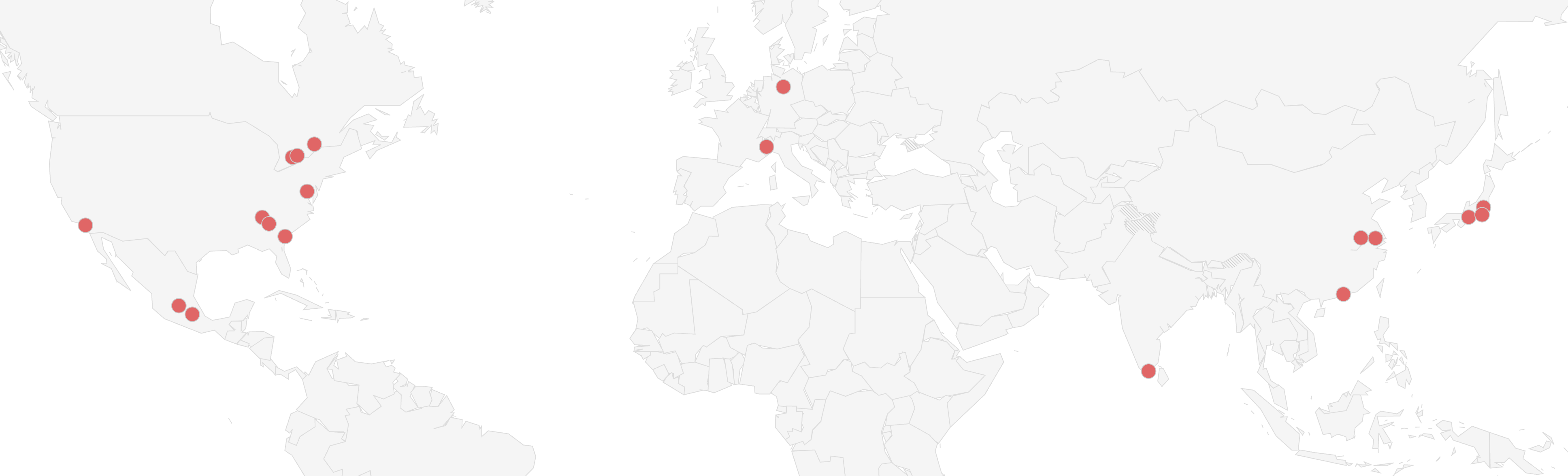
Volkswagen appoints Schubert for North America
EXPANDING
Hyundai expands North American production capacity
VinFast deepens Indian supplier localization
HUMAN CAPITAL
Volkswagen doubles job cuts, slashes variants
Xingyu graduate layoffs trigger VW probe
LABOR DISPUTE
GM Canada workers ratify investment deal
Stellantis faces contentious Canadian bargaining
MERGERS, VENTURES, ACQUISITIONS
Honda and Nissan revive software partnership
OPENING
YFore opens Georgia localization hub
VUTEQ opens Guanajuato injection molding plant
PRODUCTION DECREASE
Volkswagen cuts Puebla production shift
Blade Battery shortages constrain BYD
China decline drags Toyota sales
REGULATION
Proposed tariffs threaten Canadian auto production
CBP proposes expanded importer disclosures
Judge preserves California emissions waivers
China intensifies vehicle safety oversight
SHUTDOWN
Stellantis temporarily halts Mirafiori production
SUPPLY CHAIN
Honda targets sweeping supplier cost reductions

Change In Management
Volkswagen named Marco Schubert to lead its North American business starting in October, replacing Kjell Gruner, who is leaving after less than two years. Schubert will report directly to CEO Oliver Blume, a change from his predecessor. The appointment comes as the business has one small US plant in Chattanooga, Tennessee, which builds only the Atlas and Atlas Cross Sport, leaving Volkswagen to import most of what it sells here and absorbing what the company puts at $5.8B in annual trade policy cost. Group US sales fell about 14% last year and another 7% in the first half of 2026; Volkswagen ended US production of the ID.4 in April, and the Scout plant under construction in South Carolina will not deliver vehicles before 2028. (The group restructuring behind the pressure appears further down this issue. For suppliers, the near-term signal is not the new name but the open capacity. Chattanooga has a line without a replacement program, and the company will say only that it is exploring a new high-volume model.)

Expanding
Hyundai used its Seoul investor day to lay out a 2030 plan centered on North American production, with CEO José Muñoz projecting 5.55M global units by 2030 and 100 model launches or redesigns, 58 of which in North America. The plan adds 1.27M units of global capacity by 2030, with 500k in North America, including a 200k-unit expansion at the Metaplant outside Savannah, Georgia, and lifts local parts sourcing from 60% to 80%. The sourcing target is the first number to read. A localization shift across a 5.55M-unit base is a large block of new North American content.
VinFast is deepening local sourcing in India, with more than 300 domestic suppliers participating in recent supplier conferences as the company moves from assembling completely knocked-down (CKD) kits to designing India-specific models with higher local content. Its Thoothukudi plant, which opened with a capacity of 50k EVs per year, is being expanded to 150k. The move away from CKD assembly is where the supplier opportunity lies. Kit assembly buys almost nothing from Indian Tier 1 suppliers, while a locally designed model program buys local components such as stampings, interiors, and wiring.

Human Capital
Volkswagen's supervisory board unanimously approved Future Plan 2030, doubling planned job cuts to 100k by adding 50k positions to the roughly 50k already agreed over the past two years, and cutting model variants by about 75% by 2035. The board had rejected the plan in July, and approval followed two months of negotiation with union representatives and state shareholders. Plant closures remain unresolved. The company says European capacity exceeds demand by more than 500k units. Four German plants have no clear future, and it has committed only to producing a competitive production plan for European sites by the end of June 2027.
Volkswagen also opened an investigation into Changzhou Xingyu Automotive Lighting System, China’s largest auto lighting supplier by revenue, after the company reached negotiated terminations with 107 of the 440 fresh graduates it had hired, according to the Changzhou municipal labor bureau. Caixin reported that graduates hired a month earlier were given a choice between a voluntary exit, citing personal reasons, for half a month’s pay, or reassignment from R&D, engineering, and trainee roles to lower-paid assembly work. Xingyu lists Volkswagen, BMW, and BYD among its customers. (This reads as a governance exposure rather than a capacity event. Nothing here suggests lighting output is at risk, but an OEM investigation into a Tier 1’s labor practices is the kind of finding that changes a risk rating and triggers increased scrutiny across the rest of the supply base.)

Labor
Unifor members at General Motors Canada ratified a three-year agreement on August 29 and 30 with more than 80% support, covering about 4.6k hourly workers and carrying the same 3% annual wage increases the union secured at Ford Canada in July under its pattern strategy. About a third of those members were on layoff at the start of bargaining.
GM committed roughly $104M to add the next-generation GMC Sierra HD at Oshawa Assembly alongside the Silverado HD already built there, on top of about $249M already committed, and will move new stamping and parts work to the plant, including sunroofs, back panels, and bodysides. The added nameplate does not restore the third-shift GM cut in January, and the plant appears set to lose the light-duty Silverado.
At St. Catharines Propulsion, GM pledged about $156M for a next-generation transmission program expected to create 250 jobs starting in 2029 and recommitted about $501M to V-8 engines.
The CAMI plant in Ingersoll received a commitment not to close or sell, but no production mandate, leaving more than 1k workers idle since GM canceled the BrightDrop van last fall, with defense work potentially under consideration.
Talks with Stellantis opened in Toronto on September 1 against a weaker backdrop. About 2.2k workers at Brampton Assembly have been off the job since late 2023, when the plant shut to retool for the next-generation Jeep Compass, and Stellantis halted that retooling in early 2025 and moved the program to Belvidere, Illinois. In August, the company told Unifor it was seriously considering closing or selling Brampton, and union president Lana Payne said she has not seen a workable plan for the site. Unifor also represents about 6.4k hourly workers at Windsor Assembly plus several hundred in parts, distribution, and office roles. The union wants a deal by September 11, ahead of a September 20 contract expiry. Pattern bargaining works when each company has something to trade. Ford and GM each committed more than about $725M to Canadian plants, and Stellantis is being asked to match that at a site with no product mandate and a tariff regime that already pushed its last program south.

Mergers, Ventures, Acquisitions
Honda and Nissan agreed on August 31 to jointly develop and standardize the electronic control units, electric and electronic architecture, and vehicle control software for their software-defined vehicles, with deployment starting in the 2029 fiscal year, about two years later than first envisioned. The deal revives cooperation that stalled when the two called off merger talks in early 2025, and both have said they still want to pursue shared e-axles, battery technology, and joint procurement.

Opening
Chinese automotive electronics supplier YFore opened a 62k ft² site in Suwanee, Georgia, which the company says combines research, manufacturing, procurement, sales, and delivery under one roof, and where it built its first US digital key unit. YFore supplies intelligent mirrors, digital access systems, and in-cabin sensing to more than 30 OEMs across North America, Europe, and Asia. The company frames the investment as a response to OEM demand for localized supply.
Japanese supplier VUTEQ opened its second plant in Apaseo el Grande, Guanajuato, adding large-format plastic injection molding to build and assemble components for the Toyota Tacoma at Toyota Motor Manufacturing Guanajuato. CEO Shinji Yanagawa said it is the first time the company has operated injection molding equipment of this size, which required international technical teams to work alongside local staff. (Worth tracking against Toyota’s stated plan to move Tacoma output from Baja California to a new Texas plant. The newer Guanajuato line is not the one named as moving, but Bajío suppliers tooling up for Tacoma content should watch where the volume settles.)

Production Decrease
Volkswagen de México will indefinitely eliminate one of the three shifts on the Tiguan and Jetta lines at its largest Mexican plant in Puebla, citing demand. Local reporting identifies the night shift. Headcount estimates conflict: Volkswagen gave no figure; one report puts the impact at around 786 workers, and local and unofficial accounts range from 1.3k to 1.35k. The SITIAVW union rejected the move on August 31, saying it never agreed to the adjustments and that production alternatives it offered in May were not taken up. Mexican light vehicle production fell 2.19% year over year in July to 302k units, with exports down 9.69%, against a 25% US tariff on most vehicles and parts in place since April 2025. (A shift removed indefinitely from a two-nameplate line is a direct volume cut for the Puebla supplier base, and the schedule change matters more than the disputed headcount for anyone shipping sequenced parts there.)
BYD reported first-half revenue of about $50.6B, down 7.13%, and net profit of about $1.8B, down 20.54%, which the company attributed largely to foreign-exchange losses rather than to core operations. NEV sales fell 15.72% to roughly 1.81M units, and chairman Wang Chuanfu tied the shortfall to insufficient capacity for the second-generation Blade Battery, which is still ramping. A staff member said capacity has improved after six months of line upgrades but remains tight. Exports ran the other way, up 67.8% to 792k vehicles and now close to 44% of total sales. The most vertically integrated automaker in the industry just missed its volume on a component it makes itself. In-house supply removes the need for negotiation but not the ramp curve; the constraint now lies in BYD’s own export push.
Toyota’s global July sales fell 4.8% to 856,125 vehicles and production fell 2.1%, pulled down by a 24.3% sales drop in China, a sixth straight monthly decline there, along with a 44.5% fall in the Middle East and a 0.8% slip in the United States. Japanese output rose 12.4%, and exports from Japan climbed 10.2% to just over 196k vehicles, while Chinese production fell 32.7%.

Regulation
A proposed US tariff of 50% on Canadian-built vehicles, double the current 25% and slated to take effect on January 1, would hit Toyota and Honda hardest, which together build more than three-quarters of the cars made in Canada. Barclays analysts put Canadian-built vehicles at almost a quarter of Honda’s US sales last year and 17% of Toyota’s, with the CR-V and RAV4 the main exposures. Julie Boote of Pelham Smithers Associates said both would likely have to close some Canadian assembly lines, and analysts noted that redirecting US-bound vehicles is hard because they are built to US requirements and plants elsewhere are near capacity. Two Japanese suppliers said they cannot plan while the outcome is uncertain, with one saying they are trying not to overreact. Canada builds about 1.2M vehicles a year. If even part of that has to move, the affected Ontario supplier base has no obvious second customer, and requalifying parts at a US or Japanese site will take well past January.
US Customs and Border Protection (CBP) issued an advance notice of proposed rulemaking that would sharply raise import disclosure requirements, with comments due December 1, 2026. Under Executive Order 14411, signed June 3, CBP is weighing whether to require importers of record to submit or retain the documentation foreign exporters file with their own customs authorities, including export declarations, commercial invoices, certificates of origin, and transport documents. It is also considering replacing the manufacturer identification code with entity-level global business identifiers such as DUNS, GLN, LEI, or Altana ID, and asking importers to name the manufacturer, shipper, seller, and possibly the ultimate consignee on each shipment. The stated target is illegal transshipment used to evade duties. (This is the rare rulemaking notice worth reading before the comment window closes. Replacing the manufacturer identification code with a verified entity identifier would require purchasing and trade compliance teams to hold sub-tier identity data that most do not collect today, and the export document proposal would place a reconciliation burden on every gap between what a supplier declared at origin and what the importer declares at entry.)
A federal judge blocked the EPA from sending four California emissions waivers to Congress for repeal under the Congressional Review Act, ruling that waivers are not regulations and ordering the agency to restore conditions as they stood before June. Lawmakers had been preparing to vote on the waivers this month, and a separate California challenge to last year’s rescission of the state’s post-2035 gas vehicle ban is still pending.
Chinese regulators have launched a yearlong safety campaign, including unannounced inspections at automakers, in response to development cycles compressing to 18 months, compared with three to five years at legacy foreign competitors. The Ministry of Industry and Information Technology inspected at least five leading automakers in July and now names them soon after visits, and China is running its largest recall to date, with Tesla and eight other automakers fixing more than 4.27M EVs to meet new door requirements. Regulators have also proposed doubling mandatory road testing for new energy vehicles to 18.6k miles. Foreign automakers are chasing the same clock, with Volkswagen’s Anhui operation developing the ID Unyx 08 with Xpeng in 24 months and Renault developing the Twingo E-Tech in China in 21 months. Validation is where this reaches the supply base. A doubled road test requirement and closer scrutiny of safety-critical hardware push qualification costs and lead times onto component suppliers, and the consultants quoted expect thinly capitalized automakers to hit the compliance wall first.

Shutdown
Stellantis halted production at Mirafiori in Turin from September 2 to 4, days after the plant resumed operations following a four-week summer stoppage. The company said the Teksid plant in Carmagnola, which supplies engine components to Mirafiori, is running below the level needed to meet stronger-than-expected hybrid demand. The FIOM union gave a different reason, blaming weak demand for the Fiat 500 built at the site. Either way, an in-group components plant that cannot keep pace with its own assembly site is a capability constraint rather than a market one.

Supply Chain
Honda is targeting more than $9B in cost reductions by 2030 and has reportedly set company-specific price targets for major suppliers, according to internal documents reviewed by Reuters and people familiar with the plan. The documents set the goal of a 30% cost reduction across three categories: pressed and forged components, electrical parts, and parts tied to software-defined vehicles. Tier 1 suppliers were asked to rework material procurement, pull standardized parts from their own second- and third-tier suppliers, and expand use of Chinese-made components. Honda declined to comment on specific targets or on discussions with suppliers, saying only that it is working globally to reduce cost through standardized parts. The push follows Honda’s first annual loss as a public company and EV-related losses it expects to exceed $12B, and it sits alongside the Nissan electronics agreement announced on August 31. (A 30% target on pressed and forged parts is usually not a negotiation; it is a redesign or a resourcing. And pushing Japanese Tier 1s toward Chinese sub-tier content lowers piece price while adding origin and tariff exposure under the current US regime, a trade the buyer books and the supplier carries.)
The last few sections of this week's article are problematic for suppliers.
The China regulatory authorities are signalling concern over Chinese vehicles that could 'lose face' for the country through both OEM &/or China Supplied component recall failures (the export strategy was built over 20 years, at least. Now there is tsunami of export the state does not seem to be able to control).
And you have Nissan and Honda effectively stating they need the cheapest components possible on their vehicles, from Chinese companies. I'm not convinced Honda nor Nissan have considered their enterprise risk management. I get there are difficult decisions to be made, but can they really afford to buy cheap...!!!
Warranty is an unforgiving bitch, and death based recalls a burden that will be commercially and individually difficult to live with. In my humble opinion, suppliers MUST manage a de-scope creep wisely, D-FMEA and Testing to prescribed requirements may just have been a contractual god-send! Those that put in the intentional effort to use them as Resilience cintract protection will be vindicated, those that cut their costs through a lack of effort may have to pay the premium saved.
Great post guys.