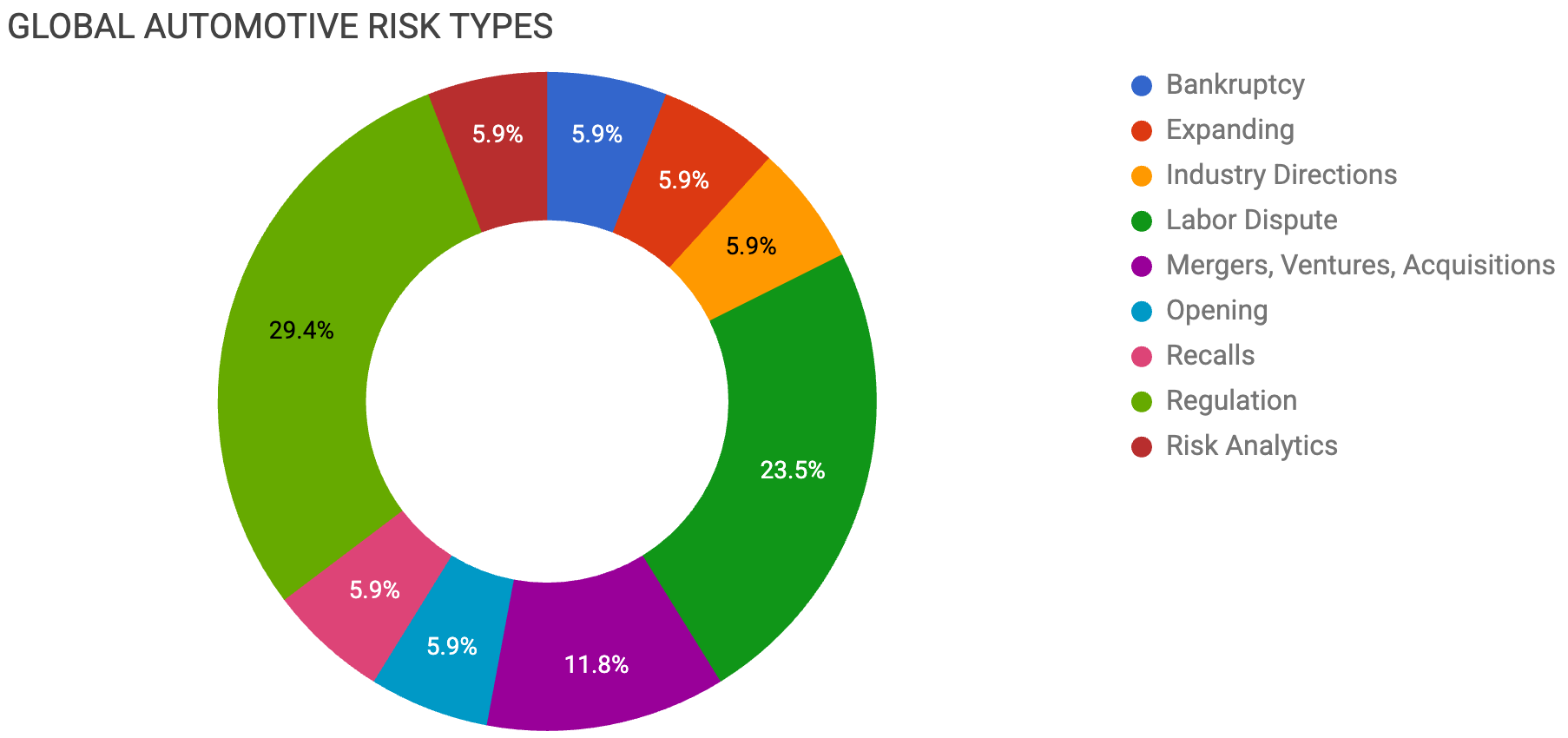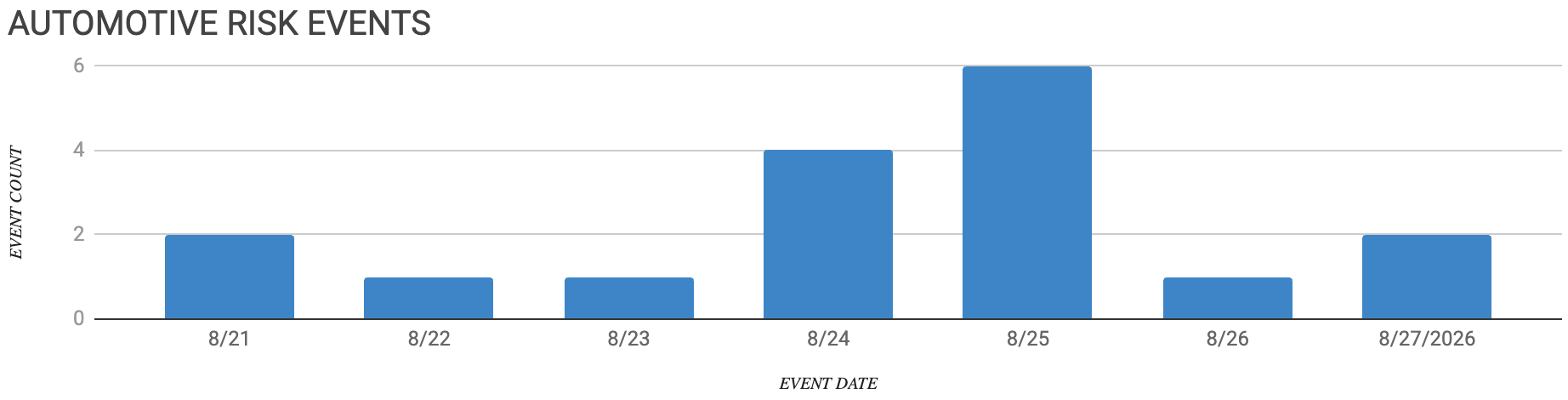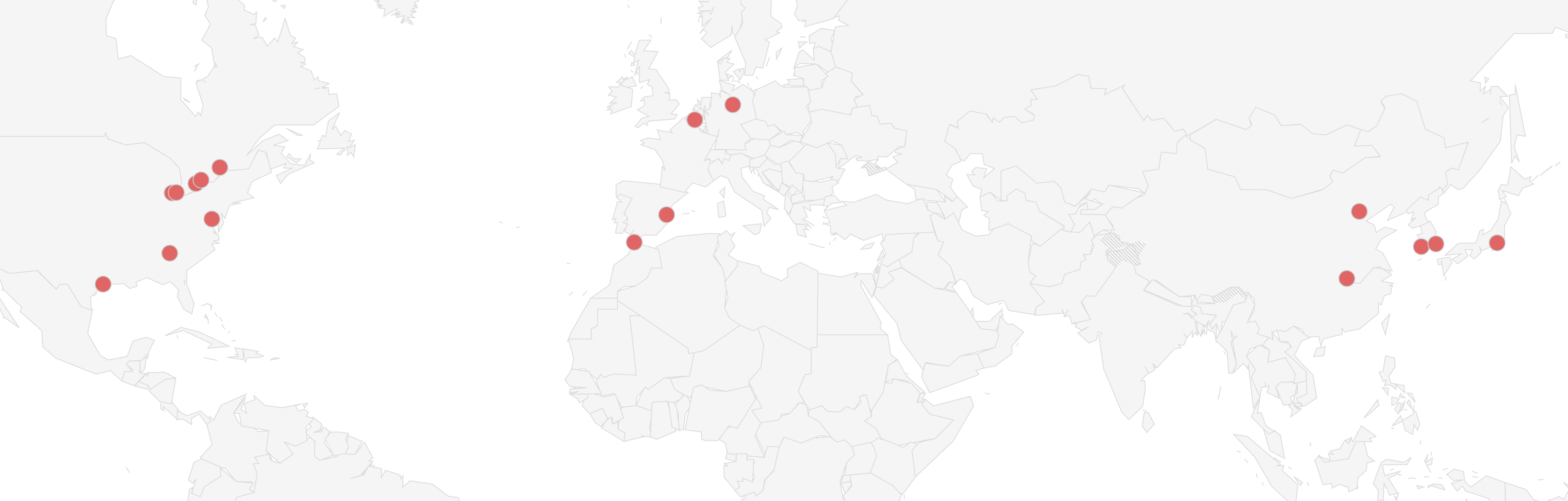
Contents
BANKRUPTCY
First Brands enters Chapter 7 liquidation
EXPANDING
Wuhu Sanlian invests $21M in Morocco
LABOR DISPUTE
Hyundai reaches tentative wage agreement
Kia avoids planned August strikes
GM reaches agreement with Unifor
Volkswagen weighs deeper German restructuring
MERGERS, VENTURES, ACQUISITIONS
Chinese brands localize European assembly
Ford partners with Geely in Spain
Jeep to resume production in China
OPENING
YFORE opens Georgia electronics manufacturing plant
RECALLS
China recalls 7M vehicles on mechanical door releases
REGULATION
Canada-US automotive trade talks collapse
Metals tariffs double
USMCA uncertainty threatens regional investment
Honda links expansion to USMCA
OEMs and Suppliers sort out who keeps tariff refunds
RISK ANALYTICS
CAR analyzes China’s automotive competitiveness

Bankruptcy
A US bankruptcy judge converted First Brands from Chapter 11 to Chapter 7 liquidation on August 24, rejecting the parts maker's plan to repay creditors by suing insiders because it deferred $222M in debts incurred during the bankruptcy and needed a $1.9B recovery to work. A few business lines have already found buyers and continue under new ownership: Toledo Molding & Die at $80M and Walbro at $50M, but everything else is now winding down under a trustee. The company filed in September with about $14M in cash and more than $9B in liabilities, then burned through a $1.1B bankruptcy loan by January, and spent its final months running on prepayments from its customers, including Ford and General Motors.

Expanding
Capacity is going in elsewhere. Chinese components maker Wuhu Sanlian Forging set up a wholly owned subsidiary in Morocco on Aug 17, in the Tangier Tech industrial zone. The new Sanlian Technology Morocco plant will make automotive electrical and electronic equipment and precision components for carmakers and Tier 1 suppliers. The planned investment has increased to about $21M, up from $4M when the project was first announced in 2024. Tangier gains a Chinese forging and electronics supplier within the duty-free reach of European assembly plants, the same localization play Chinese automakers are running one tier up.

Labor
Hyundai reached a tentative wage agreement with its Korean union on Aug 25, ending months of on-and-off walkouts that had already cost production and culminated in the first full-day strike in a decade last Friday. The deal raises monthly base pay by about $72, sets the annual bonus at 400% of the increased base, and adds a one-off payment of about $9.1k. On the retirement age, one of the harder issues in talks that began in May, the two sides agreed to hold regular wages through age 64 and to apply any new legislation immediately. Members vote August 31.
Kia settled a day later on identical terms, and its own members vote today. The agreement pulled back partial strikes scheduled for August 26 through 28, giving Kia what it called a sixth straight year of reaching a tentative deal without a walkout. Both votes still have to pass. If they do, the two largest Korean assemblers clear their annual wage cycle without further downtime, and manufacturers in the supply network can expect some stability for a while.
Ontario also settled this past week. Unifor reached tentative agreements with General Motors covering 4.6k members, with ratification votes August 29 and 30. The deal covers Oshawa Assembly, CAMI Assembly in Ingersoll, and worksites in St. Catharines and Woodstock. It follows a ratified Ford agreement with 3% wage gains each year over a three-year contract, which set the pattern floor. Oshawa builds the Chevrolet Silverado HD, one of the two products Canada's collapsed tariff talks left exposed to full US duties, so labor peace there settles only one of the plant's two problems.
Volkswagen is not headed for the same outcome. The group has no business plan past 2030 for the Emden and Zwickau EV plants, the Hanover campervan plant or Audi's Neckarsulm site, and Osnabruck is set to end vehicle production as early as next year, with a defense industry partnership still unresolved. All of it goes to a September 4 supervisory board meeting, which will take up the largest restructuring in the company's history, weighing measures that could double planned job cuts, close factories and carve out parts of the business. VW CEO Oliver Blume toured the sites this week to build support and told workers at Emden and Zwickau that German labor costs are more than double those at comparable European locations. Works council head Daniela Cavallo responded that closures and layoffs will not fix problems caused by tariffs, Chinese competition, and weak European demand. Right now, labor and the state of Lower Saxony hold a board majority, so the September 4 meeting is more likely to produce cost targets than to announce closures. However, suppliers to those five manufacturing sites may want to treat any planned volumes after 2030 as unallocated.

Mergers, Ventures, Acquisitions
Cavallo's second point is arriving as physical capacity. Chery will build cars at Nissan's Sunderland plant in the UK and Magna Steyr is building for GAC and Xpeng in Austria, two of the firmest pieces of a Chinese push into European assembly that Spain is set to anchor. How much of the components base follows the assembly depends on the European Union's Industrial Accelerator Act, now before the European Parliament, which is expected to carry value-creation and foreign-investment requirements. Mobility Global projects Chinese-brand output in Europe to rise from about 90k units this year to 1.5M by 2035, with nearly 90% fully localized, though these are forecasts, not commitments. Without the localization, economists warn, Europe ends up as a final assembly point for Chinese parts.
Spain is where it first shows up. Ford will build a new SUV on Geely's GEA electrified platform at Valencia under a proposed joint venture that would operate the plant, with Geely-owned Centurion Industries paying Ford $259M for a 34% stake in the facility. Geely Auto chairman An Conghui confirmed the platform choice on the August 17 earnings call and said Valencia would also build several Geely models, starting with the EX5 electric SUV in 2028. Ford separately plans to launch a Bronco-branded SUV there from 2028, on its own underpinnings, likely shared with the current Kuga. Building GEA vehicles in Spain also sidesteps the 28.8% EU duty Geely faces on Chinese-built battery-electric cars, and An said Geely will localize its European supply chain to meet the proposed Made in Europe rules. This mirrors Geely's 34% stake in Renault Korea and the Leapmotor arrangement inside Stellantis' Spanish plants. For Valencia's supplier base, the practical change is that a Chinese platform owner, rather than Ford Europe, handles sourcing for the new programs.
The arrangement runs in the other direction as well. Jeep will restart production in China next year and export from the country for the first time, ending a four-year gap. Stellantis and Dongfeng announced on Aug 20 that a new $1.2B company, Dongfeng Stellantis Automotive Technology, will develop two Jeep and two Peugeot electrified models, with Dongfeng Peugeot Citroen Automobile building them at Wuhan from 2027 for distribution through Stellantis’s international network. Dongfeng leads R&D on electrification and intelligent vehicle technology. Stellantis ended its previous Jeep joint venture with GAC in 2022 after volume fell to about 20k vehicles from a 2017 peak of 203k.

Opening
Suppliers are making the same move a tier down. Chinese Tier 1 electronics maker YFORE Technology opened a plant in Forsyth County, Georgia, on Aug 26, giving the Dongguan-based company North American R&D and manufacturing alongside the German facility it added in 2025. YFORE makes intelligent access systems, including digital keys and key fobs, as well as cockpit screens and camera-based mirror replacements. The tariff arithmetic behind this is the same one driving the moves into Tangier and Valencia, just at the component level.

Recalls
Those exported platforms are about to undergo a hardware change. China’s GB 48001-2026 standard requires a mechanical release on every door, taking effect for new models on Jan 1, 2027, and for models already on sale by January 2029, which ends purely electronic hidden door handles and forces redesign work by latch, door module, and handle suppliers. Regulators are in enforcement mode ahead of the deadline. On Aug 21, they disclosed the largest single round of recalls in industry history, more than 7M vehicles across Tesla, Xiaomi, Leapmotor, Xpeng, Zeekr, Chery, Dongfeng, Arcfox and FAW, nearly all of it for interior emergency releases colored close to the surrounding trim and hard to find after a crash disables the low-voltage system. Tesla accounts for 5.72M vehicles across two actions, and most remedies involve warning labels and over-the-air software updates, though Chery and Arcfox will physically replace the release covers.

Regulation
North American trade moved the other way this week. Canada-US talks collapsed on Aug 21 over two automotive issues, after days of negotiation that nearly ended an 18-month tariff fight. Prime Minister Mark Carney said US negotiators pushed to limit tariff relief to light-duty vehicles, which would have left nominal 25% duties on Ford Super Duty pickups due to start production in Ontario shortly and on Chevrolet Silverado HDs built in Oshawa, making Canadian production of both progressively uneconomic. The second sticking point was Canada's push to broaden the US parts exemption to include Canadian and Mexican content, which would have reduced the effective rate on Canadian-built vehicles to about 3.75% rather than 7.5%. Accounts conflict on who raised the heavy-truck question late, with White House sources pointing at Canada and Carney denying it. The 50% US tariffs apply to about $20B in Canadian goods.
Ottawa answered on Aug 25. The counter-tariffs move steel and aluminum products from 25% to 50%, a direct input cost increase for Canadian parts makers, with matching 15%, 25% and 50% rates applying from September 8 to about $20B of US imports across steel, appliances, agricultural equipment, electronics and other sectors. Existing counter-tariffs on vehicles are unchanged, as is the remission framework for exceptional relief. Alongside them came about $5.4B in support, including a $362M liquidity stream at the Business Development Bank of Canada, a drop in the bank's minimum revenue threshold to about $725k to widen access, and a new Worker Retention and Retraining Program, on top of roughly $18.1B provided since the tariffs began. Liquidity measures will likely matter more than counter-tariffs for most parts makers. Canadian Tier 2 and Tier 3 suppliers, thin on working capital, now have a named federal facility to point to, which changes the risk picture for the buyers carrying them.
What none of it resolves is the rulebook. Formal US-Mexico USMCA talks are set for September in Washington, and no further US-Canada talks are scheduled, leaving North American trade rules more uncertain than at any point in the dispute. Little has changed on tariff bills for now, since USMCA-compliant vehicles are still taxed at 25% minus US content, and compliant parts still cross duty-free. The risk analysts’ flag is not that USMCA disappears, but that one North American rulebook becomes two, with different qualification, sourcing, and investment requirements on the Canada and Mexico corridors. US auto exports to Canada are already down 23% year over year, according to Autos Drive America. Most executives read Trump's threat of 50% duties on Canadian vehicles and parts from Jan 1 as a negotiating posture. However, Automotive Parts Manufacturers' Association president Flavio Volpe wrote on August 24 that duties at that level would shut down US assembly before Canadian assembly. The USMCA went to annual reviews after the US declined in July to extend it past 2036, so the investment freeze now recurs yearly rather than having a chance to resolve.
That freeze has a number attached to it this week. Honda may not build an eighth North American assembly plant if USMCA is not extended, executive vice president Noriya Kaihara told reporters in Washington. He said Honda is close to full North American capacity and needs the plant, wants it running by around 2030, and has to decide within a year or two. The company has already suspended its $11B Canadian EV and battery project indefinitely, canceled three planned US EVs, scrapped its long-term EV sales target in May, and now plans 15 new hybrids by 2030, and it is not currently passing tariff costs to North American buyers. Hyundai made the same argument in November, tying more than $20B in US investment to early confirmation of USMCA. Two of the largest greenfield opportunities in North America are now explicitly conditioned on an agreement under annual review.
Tariffs already paid are their own problem. Automakers and suppliers are sorting out who keeps the refunds flowing from February’s Supreme Court ruling, which found that the reciprocal duties that were imposed under the International Emergency Economic Powers Act were unlawful. According to an August 4 court filing, the government has returned about $100B of the roughly $166B that was unlawfully collected. Auto industry receipts are less clear, with MEMA’s Collin Shaw estimating $13B to $14B returned, compared with PwC's estimate that the industry paid about $20B, and the Detroit 3 alone expecting around $2.3B. Refunds for unliquidated entries are fairly straightforward and can be claimed through a customs portal. But the government maintains it cannot repay liquidated entries without a court order, and more than 3.7k companies have sued in the Court of International Trade to get one. Smaller suppliers may find that legal fees and the public disclosure of their tariff payment records outweigh the recovery. A class action proceeding through the courts could eventually result in refunds without a filing. Even stickier situations are contractual. For example, if a customer provided tariff relief through price adjustments, that refund may be owed back through the chain. Those types of reconciliations will likely settle within the commercial relationships rather than in court.

Risk Analytics
Center for Automotive Research: China's Automotive Surge: The Six 'S' Framework Underpinning China's Global Competitiveness.
Worth the read for purchasing, risk, and strategy teams building a view of China exposure. CAR's analysis puts the global share of Chinese automakers at 25% in 2025, up from 14% in 2020 and nearing Japan's 26%, with Chinese production exceeding domestic sales by about 6.2M vehicles and excess capacity near 15M units. It also credits China with roughly 68% of global EV battery production and about 85% of battery recycling capacity, and notes that Chinese market share in Mexico rose from under 1% in 2020 to 14.5% in 2025.