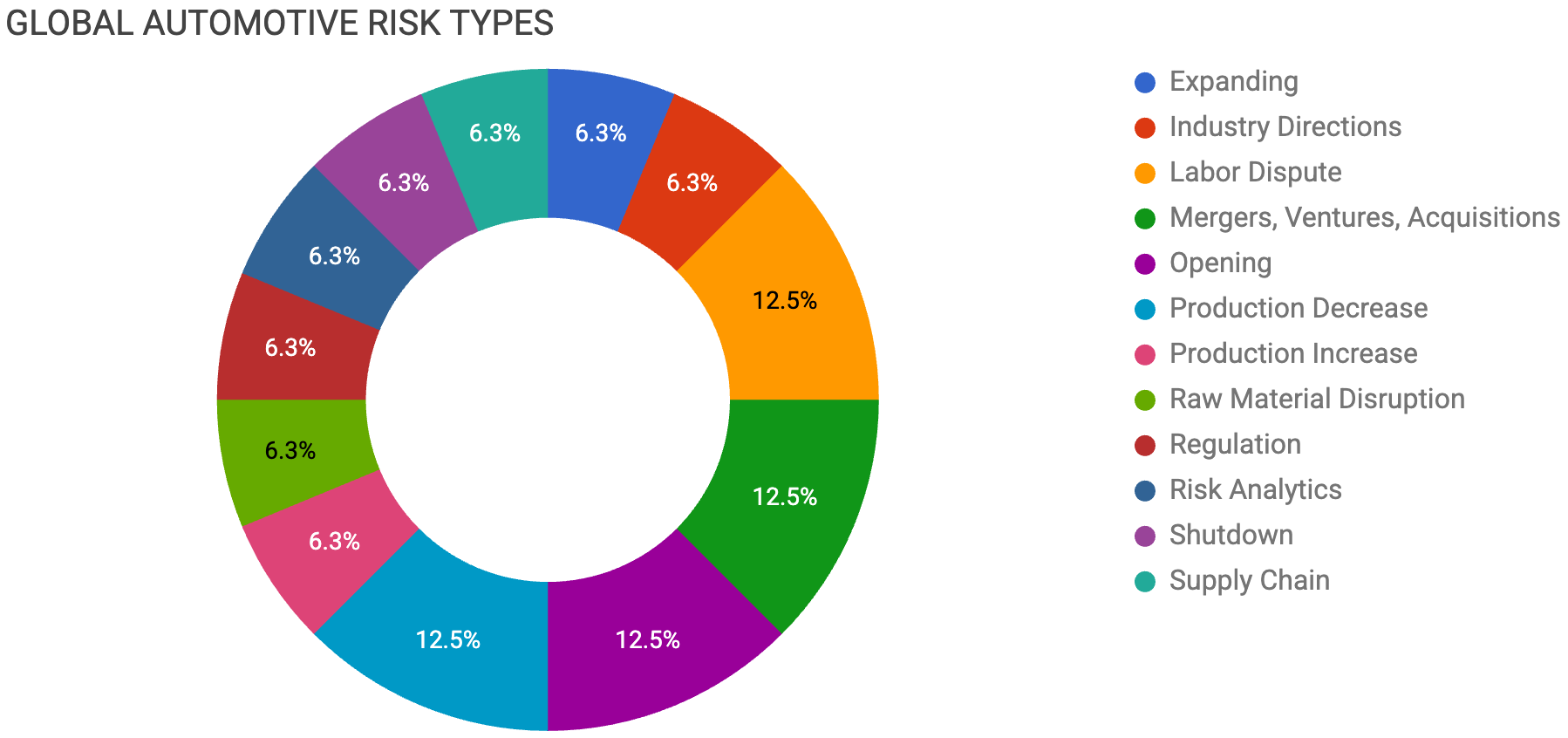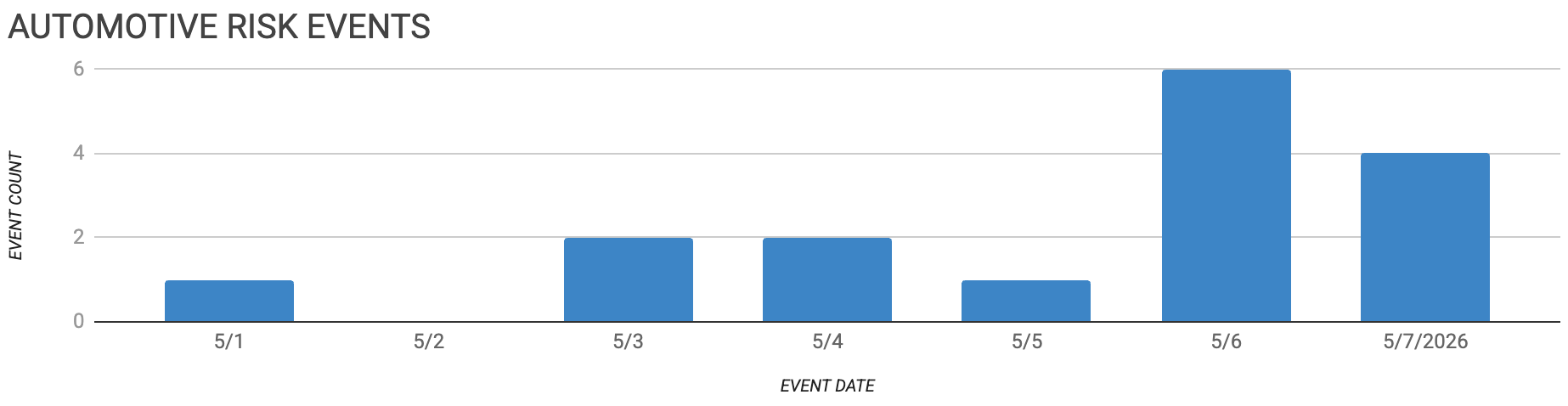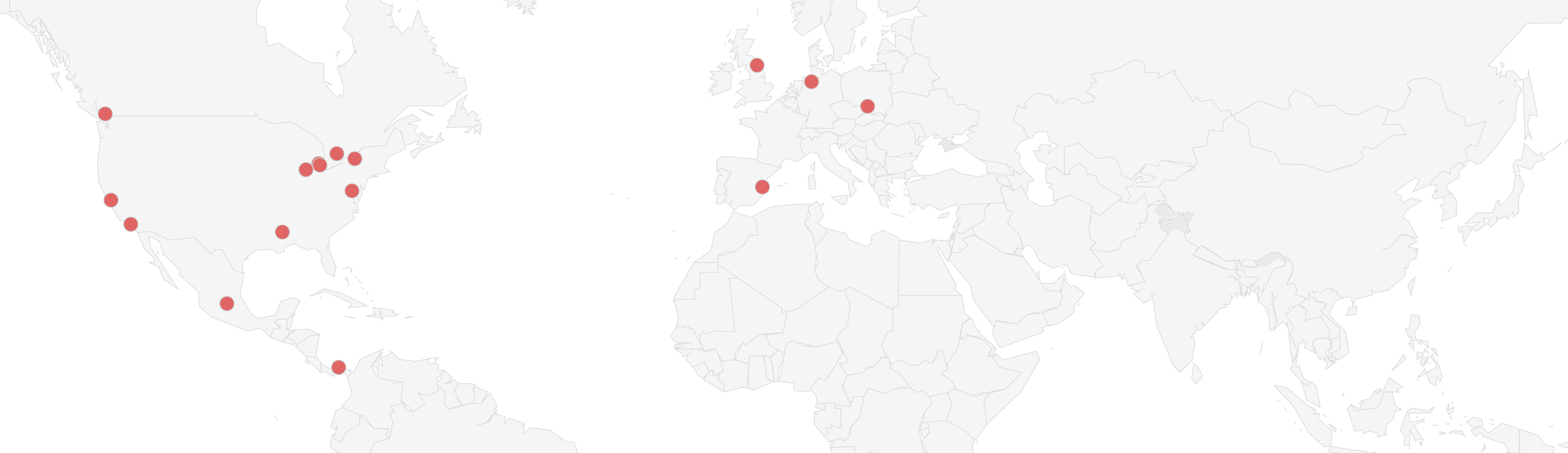
Contents
EXPANDING
Hirschvogel expands Queretaro aluminum forging
INDUSTRY DIRECTIONS
Honda delays next generations past 2030
LABOR DISPUTE
Michigan UAW locals weigh strikes
Stellantis Sterling Heights strike vote
MERGERS, VENTURES, ACQUISITIONS
Foxconn backs Polish EV hub
Ford reportedly explores Valencia sale to Geely
OPENING
GM reopens Orion for trucks
Mangrove opens Canadian lithium refinery
PRODUCTION DECREASE
Nissan consolidates Sunderland production lines
Canton shifts back to gasoline
PRODUCTION INCREASE
Mercedes ramps electric GLC production
RAW MATERIAL DISRUPTION
Aluminum squeeze hits truck inventories
REGULATION
Trump raises EU auto tariffs
RISK ANALYTICS
Shipping chokepoints threaten automakers
SHUTDOWN
Honda freezes Alliston EV complex
SUPPLY CHAIN
Lucid seat issue disrupts Gravity

Expanding
German manufacturer Hirschvogel is expanding its plant in San Juan del Rio, Queretaro, Mexico, with a new aluminum forging division. The site will roughly double its operational footprint to 452k ft² and add 200 new workers. The company said it is also working to bring more suppliers closer to the Queretaro operation to improve logistics efficiency, reinforcing Mexico's role in the North American supply chain even as tariff and USMCA uncertainty pressures the region.

Industry Directions
Honda is extending production runs for core models like Odyssey, Accord, HR-V, Acura MDX, and Integra, with some life cycles stretching past a decade as the automaker absorbs a $15.8B charge tied to its EV pullback. Most next-generation versions will be delayed to 2030 or later. Honda will focus on hybrids, with 13 new models planned for 2027 and beyond. For suppliers, the extensions mean operational inefficiency and delayed capital and R&D, especially problematic for those already facing financial pressure from inflation, tariffs, and rising competition. The bottom 20% of the supplier base is especially vulnerable, with little margin left to absorb shocks.

Labor
Two major Michigan UAW locals are moving toward strike authorization votes in May, raising near-term production risk for two of the most profitable vehicle programs in North America. UAW Local 2093 members at Dauch Corporation, a Tier 1 driveline supplier to General Motors, will vote on May 11 at the Three Rivers, Michigan, plant, with a possible walkout on May 31. The dispute centers on restoring wages and benefits that were not restored since the 2008 crisis, despite the company's profitability. A walkout could quickly affect GM truck production.
UAW Local 1700, representing roughly 6,000 hourly workers at Stellantis' Sterling Heights Assembly Plant, will hold its strike authorization vote May 7 and 8. The plant builds the Ram 1500, a key Stellantis model. The main issue is the union's opposition to outside contractors performing work claimed under 2023 contracts. A walkout would require international UAW approval and could disrupt Ram inventory, as Stellantis relies on truck sales for its turnaround.

Mergers, Ventures, Acquisitions
Polish state-backed ElectroMobility Poland is partnering with Taiwan's Foxconn and its EV subsidiary Foxtron to develop an EV production and research hub in Jaworzno, southern Poland, with binding agreements targeted for the second half of 2026. Initial production capacity will be around 100k vehicles per year, scalable to 380k-400k with future expansion, and the first car is set to roll off the line in 2029. EMP cited Foxconn's commitments to technology transfer, in-house Polish design capability, and the use of local suppliers as decisive factors. The project is funded through Poland's National Recovery Plan and Reprivatization Fund, and it adds another EV manufacturing footprint to Central Europe at a moment when Spain is drawing most Chinese-led investment.

Ford is reportedly in advanced talks to sell a portion of its Valencia, Spain, plant to Geely, with the Chinese automaker considering producing a new EV at the facility based on its Global Intelligent Electric Architecture. Sources cited in Spanish media say the deal could also involve Geely producing a vehicle for Ford using the same platform, and Reuters has previously reported broader technology-sharing discussions, including ADAS. The arrangement would let Geely sidestep the EU's 18.8% tariff on Chinese-built EVs while giving Ford cash and access to Chinese platform technology as it restructures in Europe. Ford has already partnered with Renault on two affordable EVs based on the Ampere platform, and CEO Jim Farley has called Chinese automakers an existential threat to Western brands.

Opening
General Motors has told suppliers it will launch production at Orion Assembly in the second quarter of 2027, with an annual volume of 190k units, just shy of two-thirds of the plant's capacity. The site will build the gas-powered Chevrolet Silverado and GMC Sierra pickups, along with the Cadillac Escalade and Escalade ESV, after GM reversed course from its original all-electric plan and committed roughly $6B to retool for combustion. Headcount has already passed 600 and is expected to grow rapidly toward year-end, with priority placement going to workers on indefinite layoff from Factory Zero and other GM plants. Tier 1 suppliers, including Lear, Piston Automotive, Flex-N-Gate, and GFX, are tooling up around the plant, and GM is reactivating the rail spur to move metal frames in from Pontiac on a just-in-time basis.
Mangrove Lithium has opened North America's first commercial-scale electrochemical lithium refinery in Delta, British Columbia, with a capacity of 1k metric tons of battery-grade lithium per year, enough to supply roughly 25k EVs. The facility will source spodumene feedstock from North American Lithium's mine in Quebec, establishing an all-Canadian lithium supply chain for the first time. Mangrove is already planning a much larger eastern Canadian facility designed to supply enough lithium annually for 500k EVs, signaling continued investment in domestic battery materials despite slowing North American EV demand.

Production Decrease
Nissan is consolidating Sunderland production in the UK from two underutilized lines onto one high-utilization line in the second half of this year, converting it to a three-shift operation while adding battery-electric Juke production in 2027 and a battery-electric Qashqai shortly after. The plant produced 273k vehicles in 2025, well below its 2019 peak of 500k. Nissan said no production jobs will be cut at Sunderland, but separately confirmed plans to reduce its European workforce by about 900 positions, or 10%, including warehouse closures in Barcelona. The freed-up Sunderland line is now in talks with Chinese automaker Chery as a potential European manufacturing footprint, building on Chery's existing operations at Nissan's former Barcelona plant.
Nissan has fully abandoned plans to produce electric vehicles at its Canton, Mississippi, plant, ending a project that originally targeted five US-built EV models, including two crossovers planned for 2028. The decision follows the collapse of US EV sales after the end of federal incentives, and Nissan will now serve the US EV market entirely through imported models, such as the new Leaf. The Canton plant will instead expand production of conventional gasoline-powered vehicles. The reversal adds to a growing list of canceled North American EV projects from Ford, GM, Honda, and others, and underscores how rapidly US policy changes are forcing automakers to redirect capital and supplier programs back toward combustion.

Production Increase
Mercedes is ramping up production of the all-electric GLC at its Bremen, Germany, plant, where the new model is being assembled alongside the gasoline, hybrid, and plug-in-hybrid GLC variants and the electric EQE. Mercedes said the new GLC has generated more orders in its first three months than any other electric model in company history, giving suppliers a useful signal that the program is tracking ahead of expectations. The multi-site, multi-powertrain production model illustrates how German OEMs are using existing flexible plants rather than dedicated EV facilities to manage the uncertainty around electrification timelines.

Raw Material Disruption
Building on last week's reporting on the aluminum crunch in Japan, the supply squeeze is now hitting US truck inventories. Texas Ford dealer Sam Pack told the Wall Street Journal that his F-150 inventory has dropped to about 42 days from a normal 60, with the next 90 days the critical period heading into the summer selling season. North American auto industry aluminum consumption reached 3.7M metric tons last year, nearly 30% above 2020 levels, as automakers leaned harder on the metal to meet fuel economy and weight targets. Aluminum-intensive vehicles like the F-150 and Super Duty are particularly exposed, and dealers are watching the squeeze tighten just as automakers face other tariff and demand pressures.

Regulation
US President Trump announced he will raise tariffs on EU-made cars and trucks to 25%, up from the 15% rate negotiated under last year's Turnberry agreement, accusing the EU of failing to comply with the deal without specifying how. The European Commission said it remains committed to the agreement and will keep options open to protect EU interests, while a senior MEP called the move evidence that the US is an unreliable trading partner. Trump's post said EU automakers producing in US plants would face no tariff, framing the increase as further pressure to localize production. The hike adds another layer of cost uncertainty for European OEMs already managing Section 232 auto tariffs and the recent overhaul of steel and aluminum derivative tariffs.

Risk Analytics
Industry analysts are warning that geopolitical and climate risks are turning major shipping waterways into recurring sources of supply chain disruption, with one Roland Berger director describing it as a black swan event every six months. The Strait of Hormuz closure tied to the Iran conflict is the immediate concern, but analysts flagged three other chokepoints automakers should be mapping.
The Taiwan Strait carries 90% of advanced semiconductor production, and any blockade would echo the 2021-23 chip shortage.
The Strait of Malacca handles 40% of global trade through a passage less than two miles wide at its narrowest.
The Panama Canal has already been disrupted by drought-driven water levels and U.S.-China tensions.
AlixPartners said most automakers have not yet mapped their supply chains to Tier 4 or 5 because of trust gaps with suppliers, leaving them exposed to cascading regional shocks, such as Qatar's role in helium supply for semiconductor production.

Shutdown
Honda is reportedly halting development of its $15B EV complex in Alliston, Ontario, moving from a one-year-old pause to a more definitive freeze as the automaker pivots its North American strategy toward hybrids. The project, announced in 2024, would have included vehicle assembly and battery production with up to $5B in federal and provincial funding contingent on the project proceeding. The reversal adds to a growing list of canceled or delayed Canadian EV investments, including GM's BrightDrop electric van production at CAMI and Ford's pivot at Oakville. Honda produced just over 400k vehicles in Canada last year, making it the second-largest producer behind Toyota, and the freeze leaves the existing Alliston operation focused on conventional gas and hybrid Civic and CR-V production.

Supply Chain
Lucid has suspended its full-year production guidance of 25k to 27k vehicles as incoming CEO Silvio Napoli reviews the business. CFO Taoufiq Boussaid characterized the suspension as a governance decision. A seat supplier issue significantly disrupted Gravity SUV deliveries in February and contributed to Q1 revenue of $282.5M, well below analyst estimates of $389.2M. Lucid is also reevaluating the production start for vehicles based on its new midsize platform, which had previously been targeted for late 2026. The combination of suspended guidance, midsize-platform timing under review, and recent supplier quality issues creates uncertainty for suppliers tracking Lucid's volume commitments and program timing.