


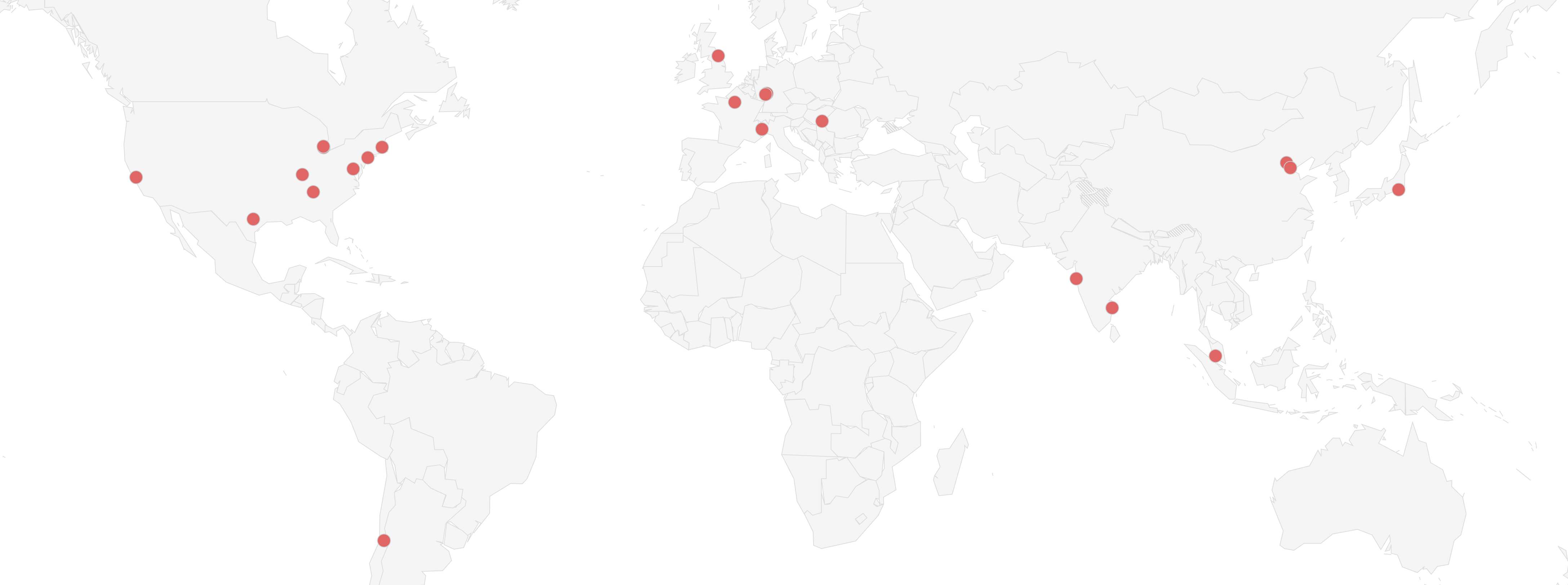
Contents
BANKRUPTCY
Evergrande EV unit collapses bankrupt
CHANGE IN MANAGEMENT
Lucid appoints Napoli, raises funding, expands Uber
Ford dissolves EV unit, Doug Field exits
Chapter 11 Marelli names Henderson interim CEO
CLOSING
Resrg closes plating plants amid demand shift
EARNING DIP
Volkswagen books major ID4 writedown charge
HUMAN CAPITAL
Stellantis cuts Opel engineers, refocuses tech
BYD faces labor violation allegations Hungary
INDUSTRY DIRECTIONS
Global OEMs localize EVs, China tech push
Chinese lead software-defined vehicle development gap
Nissan shrinks lineup amid EV demand shifts
LITIGATION
Tesla faces multibillion-dollar litigation across fronts
MERGERS, VENTURES, ACQUISITIONS
Nissan explores Chery UK manufacturing partnership
Stellantis considers renewed Dongfeng European partnership
Renault grants India autonomy, new platforms
PRODUCTION DECREASE
Stellantis ending Poissy vehicle production 2028
PRODUCTION INCREASE
Nissan reserves Chennai capacity
RAW MATERIAL COSTS
Lithium prices surge, supply tightens globally
REGULATION
US tariffs overhaul increases auto costs
CBP launches IEEPA tariff refund tool
Malaysia restricts imported EVs, push localization
RISK ANALYTICS
German rubber suppliers warn OEM price pressure risks

Bankruptcy
The three manufacturing bases of China Evergrande New Energy Vehicle Group in Tianjin, Shanghai, and Guangzhou have all entered bankruptcy proceedings, carrying nearly $2.6B in confirmed debt. The EV unit produced just 1.7k vehicles total and delivered 1.4k before halting operations, with its stock suspended since April 2025. Founder Hui Ka Yan has pleaded guilty to eight charges, including fraud and embezzlement, in a Shenzhen trial. The collapse closes the final chapter on what was once pitched as a multi-billion-dollar automotive venture, built on the back of a real estate empire that defaulted on its dollar bonds in December 2021 and was ordered liquidated by a Hong Kong court in January 2024.

Change In Management
While Evergrande's EV ambitions ended in bankruptcy, Lucid Group is making a fresh push to keep its own alive. The company named Schindler Group veteran Silvio Napoli as its new CEO, replacing interim chief Marc Winterhoff, and secured $750M in fresh investment split between Saudi Arabia's Public Investment Fund affiliate Ayar and Uber subsidiary SMB Holding. Alongside the capital raise, Lucid and Uber expanded their autonomous vehicle partnership, increasing the total fleet commitment from 20k to at least 35k EVs covering both the Gravity SUV and Lucid's upcoming midsize model, all outfitted with autonomous driving technology from Nuro. The robotaxi program is expected to launch commercially in San Francisco later in 2026 before expanding to dozens of global markets over the following six years.

Ford is also reshaping its EV strategy, but in the opposite direction. The automaker is folding its standalone electric vehicle division into a new combined unit called Product Creation and Industrialization under COO Kumar Galhotra, and chief EV officer Doug Field will leave the company next month after nearly five years. Field, who joined from Apple in 2021 and previously led Model 3 development at Tesla, oversaw the creation of Ford's Universal EV Platform and a planned $30k midsize electric pickup due out of Louisville Assembly in 2027. That program survives under newly promoted VP Alan Clarke, but the restructuring signals Ford's view that its EV challenge is now about industrialization and cost, not product vision. Ford tied the move to an 8% adjusted EBIT margin target by 2029 and plans to offer electrified powertrains on roughly 90% of global nameplates by 2030.
Troubled Japanese auto supplier Marelli has named Fritz Henderson as interim CEO to guide the company through its Chapter 11 bankruptcy, which began last June. Henderson is best known for his eight-month stint leading GM through its 2009 bankruptcy and government bailout, and he also served briefly as interim CEO of seating supplier Adient in 2018. Marelli, which ranks No. 25 among the world's largest suppliers with $11.6B in 2024 sales, produces everything from under-the-hood functional parts to front-end modules with integrated electronics for major customers including Nissan and Stellantis. His permanent replacement has already been named as Laurent Favre, former CEO of French supplier OPMobility.

Closing
Automotive supplier Resrg is closing electroplating plants in Evansville, Indiana, and Farmington, Missouri, eliminating 266 jobs at the Indiana site alone as demand for chrome-plated plastic components declines. The company cited a market shift as automakers move from chrome trim to painted exterior finishes. Resrg was formed in 2025 when private equity firm Atlas Holdings combined SRG Global with Rehau Automotive, creating a supplier with about 10k employees across 22 production sites worldwide. The company will continue operating nine other electroplating facilities across six states.

Earning Dip
Volkswagen Group will book a charge equivalent to 60% to 75% of its original $800M investment to retool the Chattanooga plant for ID.4 production, hitting Q1 earnings. Excluding the writedown, VW's operating earnings would have increased year over year. Analysts noted VW will also benefit going forward from no longer selling what had become an unprofitable vehicle in the US market. VW has said a future version of the ID.4 is planned for North America, but has not provided details on where it will be built.

Human Capital
Stellantis is also restructuring its European operations, cutting 650 engineering jobs at Opel’s headquarters in Rüsselsheim, Germany, and reducing the site’s engineering workforce from about 1.65k to 1k. The remaining operation will be refocused as a specialized tech facility for advanced driver-assistance systems, battery development, and artificial intelligence tied to Stellantis’s STLA Brain architecture. Rüsselsheim has steadily shed jobs since PSA Group acquired Opel in 2017, when roughly 7k engineers were employed across Opel's locations. The cuts come as Stellantis pursues advanced talks with its Chinese partner, Leapmotor, to jointly develop an Opel-branded electric SUV at the Zaragoza plant in Spain.
A report from New York-based nonprofit China Labor Watch alleges labor violations at BYD's new plant in Szeged, Hungary, including evidence of debt bondage, illegal visa use, and excessive working hours affecting Chinese migrant workers hired through subcontractors. Workers reportedly described seven-day work weeks and shifts exceeding legal limits, and were allegedly instructed during pre-departure training to lie to inspectors about their hours. BYD said it prioritizes worker rights and that it and its vendors strictly comply with requirements. The plant is BYD's first major car manufacturing facility in the EU, part of the company's push to increase overseas sales by more than 40% to 1.5M units this year.

Industry Directions
While Chinese automakers work to establish a manufacturing presence in Europe, global OEMs are increasingly turning to Chinese technology to compete in China itself. At the Beijing auto show, Volkswagen, GM, BMW, and Hyundai are showcasing locally developed EVs featuring digital interfaces and AI applications developed in partnership with Huawei, Momenta, and Xpeng. The push reflects the urgency of the competitive gap, with international brands' share of China's light-vehicle market falling to 31% in 2025 from 56% in 2017. German OEMs posted steep Q1 sales declines in China, with Mercedes down 27%, VW down 15%, Porsche down 21%, and BMW down 10%.
The technology gap extends well beyond the Chinese market. An AlixPartners survey of roughly 1k automotive executives found that Western automakers are falling behind Chinese rivals in software-defined vehicle development by outsourcing critical capabilities rather than building them in-house. The data show that 41% of Chinese automakers develop core SDV technology internally, compared with 27% for European and 25% for US manufacturers, and that 36% of Chinese OEMs allocate more than half of their R&D budgets to SDV work, versus 21% for Western peers. On the architecture side, 39% of Chinese automakers have adopted central zonal architectures, while roughly 60% of Western OEMs remain on legacy hybrid approaches. The consulting firm warned that every year the gap persists, the cost of catching up compounds.
As part of its turnaround effort under CEO Ivan Espinosa, Nissan is cutting its global model lineup from 56 to 45, building on previously announced plans to close seven plants and reduce its workforce by 15%. The move reflects a broader pattern across legacy automakers as they lose market share to Chinese rivals and shift focus toward fewer, higher-margin models to preserve profitability. Meanwhile, the Middle East oil shock is driving a 37% year-over-year increase in European EV sales in March, according to Benchmark Mineral Intelligence, with the real demand impact expected to show up in April and May data.

Litigation
Tesla faces more than 20 active litigation fronts, including wrongful death suits over Autopilot, securities fraud, racial discrimination, and consumer fraud, with total potential financial exposure estimated at between $2.7B and $14.5B. Key cases include a landmark $243M jury verdict in the Benavides Autopilot crash case, a certified class action over Full Self-Driving marketing, and more than 900 individual racial discrimination lawsuits related to its Fremont factory. While Tesla's $40B cash position means the liability will not threaten the company's survival, the scale of ongoing litigation represents a growing operational and financial distraction.

Mergers, Ventures, Acquisitions
Nissan has held talks with China's Chery about building cars at its Sunderland plant in the UK, which is currently operating at about 50% capacity, according to the Financial Times. The discussions reflect a broader trend of Chinese automakers seeking European manufacturing partnerships to avoid import duties and shorten supply chains. Chery already has a joint venture with Spain's Ebro at a former Nissan site in Barcelona and recently acquired Nissan's manufacturing assets in South Africa. Nissan said it is assessing opportunities to secure full plant utilization at Sunderland, where it has announced plans to add production of an all-electric Juke in Q4.
Stellantis is pursuing a similar playbook, talking to China's Dongfeng about giving the state-owned automaker access to underused Stellantis factories in Europe while Dongfeng would, in turn, produce selected Stellantis brands in China. Dongfeng representatives have recently visited sites in Germany and Italy, and discussions have included the possibility of Dongfeng acquiring or investing in one or more European plants. The talks are part of a broader push by Stellantis to improve plant utilization and avoid politically sensitive closures, and the automaker has also met with Xiaomi and Xpeng about overhaul options. CEO Antonio Filosa is expected to outline further strategic steps at a capital markets day on May 21.
Renault is handing greater autonomy to its Indian operations under a new "India-for-India" strategy, giving local management full control across the value chain to match the speed and flexibility the market demands. The plan includes two new platforms: an entry-level architecture for $12k compacts and a CMF-B-based platform for a renewed SUV lineup, including the next-generation Duster and a three-row derivative. Renault is also positioning its Chennai plant as an export hub for vehicles and components, while planning to offer petrol, CNG, hybrid, and electric powertrain options across its lineup to match India's multi-energy market reality.

Production Decrease
Stellantis will end vehicle production at its Poissy plant near Paris by 2028, once current production of the DS 3 and Opel Mokka wraps up. The site will remain operational for component manufacturing, with Stellantis committing 100M euros to transform the facility for activities such as 3D printing of parts, vehicle refurbishment, and recycling. Production at Poissy has fallen sharply from 145k cars in 2023 to a projected 68k this year, and employment has dropped from 27k at peak to about 1.6k today. The closure adds to the growing list of underutilized Stellantis plants in Europe that could become candidates for Chinese manufacturing partnerships.

Production Increase
Nissan has reserved at least 250k units of annual capacity at the Renault-controlled Chennai plant through at least 2029, with an option to renew, thereby securing its Indian manufacturing base after selling its 51% stake as part of a broader alliance restructuring. The arrangement includes a fixed transaction price designed to protect profitability as the relationship shifts from partner to customer-supplier. Nissan is expanding from a single-model lineup around the Magnite to four vehicles within a year, lifting its segment coverage from under 20% to close to 70%. The deal benefits both sides: Renault gains the volumes needed to push plant utilization toward 400k units annually, while Nissan retains access to half the plant's capacity without tying up equity.

Raw Material Costs
Chile is opening its annual global copper gathering, CESCO Week, with an inaugural World Lithium Conference as the country seeks to capitalize on its position as the world's third-largest lithium resource holder, with 13M tons. Lithium prices have rebounded to more than two-year highs as the Middle East conflict spurs fresh interest in EV battery metals, while supply is tightening from a mine closure in China, an export ban in Zimbabwe, and dwindling lithium carbonate stocks. CRU expects Chinese lithium carbonate prices to average about $22/kg this year, up roughly 135% from 2025, and Macquarie estimates global lithium demand will jump more than 20% annually through the end of the decade. Five mining companies, including Rio Tinto, are angling for development rights in Chile, though the country faces a delicate balancing act between Chinese and US investment interests.

Regulation
The Trump administration overhauled how it assesses duties on imported steel and aluminum derivative products, and auto trade attorneys say the change will likely increase tariff bills for automakers and suppliers. Derivative goods are now subject to a flat 25% tariff on the entire value of the product, replacing the previous 50% duty applied only to the metal content. For a $1k product containing $200 of steel, the tariff bill jumps from $100 to $250 under the new calculation. Some industrial goods, including certain robots and injection molds, will be taxed at a temporarily reduced 15% rate through the end of 2027. Attorneys described the change as simpler to administer but more costly, with one noting that companies should be careful what they wish for when asking for simplification.
On the refund side of the tariff equation, US Customs and Border Protection launched a new tool, CAPE, on April 20 within the ACE trade portal, which allows importers and brokers to file consolidated refund requests for duties imposed under the International Emergency Economic Powers Act. The system processes refunds in bulk rather than entry by entry, with valid refunds generally issued within 60 to 90 days. Phase 1 covers unliquidated entries and entries within 80 days of liquidation, with subsequent phases planned for more complex scenarios. Supply chain teams managing tariff exposure should coordinate with their customs brokers to ensure ACE portal access and ACH refund enrollment are in place.
Malaysia has imposed new restrictions on imported electric vehicles aimed squarely at Chinese automakers, doubling the minimum sale price for imported EVs to $50k after a tax holiday that ended December 31, 2025, had allowed Chinese brands like BYD to dominate the country's growing EV market. The government is pushing Chinese companies to assemble and manufacture vehicles locally, offering tax incentives for assembly plants but requiring that 80% of output be exported and sold at a minimum price of $25k. BYD said it is "still reviewing all possibilities" regarding its planned Perak assembly plant, while Chery is moving forward with a facility near Kuala Lumpur. Malaysia's domestic automaker Proton, which is 49.9% owned by China's Geely, sold 6,701 units of its e.MAS 5 electric car in Q1, far outpacing BYD's 999 units of the Atto 3.

Risk Analytics
Germany's rubber industry association, WDK, issued a sharp rebuke of automakers' demands for supplier price cuts, calling them "reckless" and "existentially threatening" to suppliers already operating at the limits of their flexibility. Managing director Boris Engelhardt said German automotive manufacturers are now acting purely on cost, ending decades of collaborative partnership with their supply base. He pointed to 65B euros in OEM write-downs in 2025 as evidence of strategic missteps driven by a lack of technological openness, arguing that the answer to forced capacity adjustments cannot be to demand massive price reductions from suppliers who have already shrunk. The statement reflects rising tension between OEMs and their European supply base as restructuring pressures intensify across the industry.
I'm possibly going to add a fair amount of controversy, not sorry though.
Absolutely fascinating research and analysis by AlixPartners. Nailed what has been apparent since circa 2010 [ish] but not always obvious outside of European and US OEMS. In essence, a total dereliction of strategic planning for the future.
Couple the research with the comments... no... the statement of fact from the WDK MD, Boris Engelhardt, one has to conclude the strategic decisions that have been made historically, continue to have been made from at least 2010, and are now being planned to be made, are not in the interests of a western automotive industry future. Nor a number of nations and supply bases that rely on their success.
This begs a very serious question - should the executive teams or the shareholders bare responsibility of a declining automotive OEM industry, and the freefall of GDP for each of the nations affected?
As ever, a great post guys, a lot of fascinating data to work through.