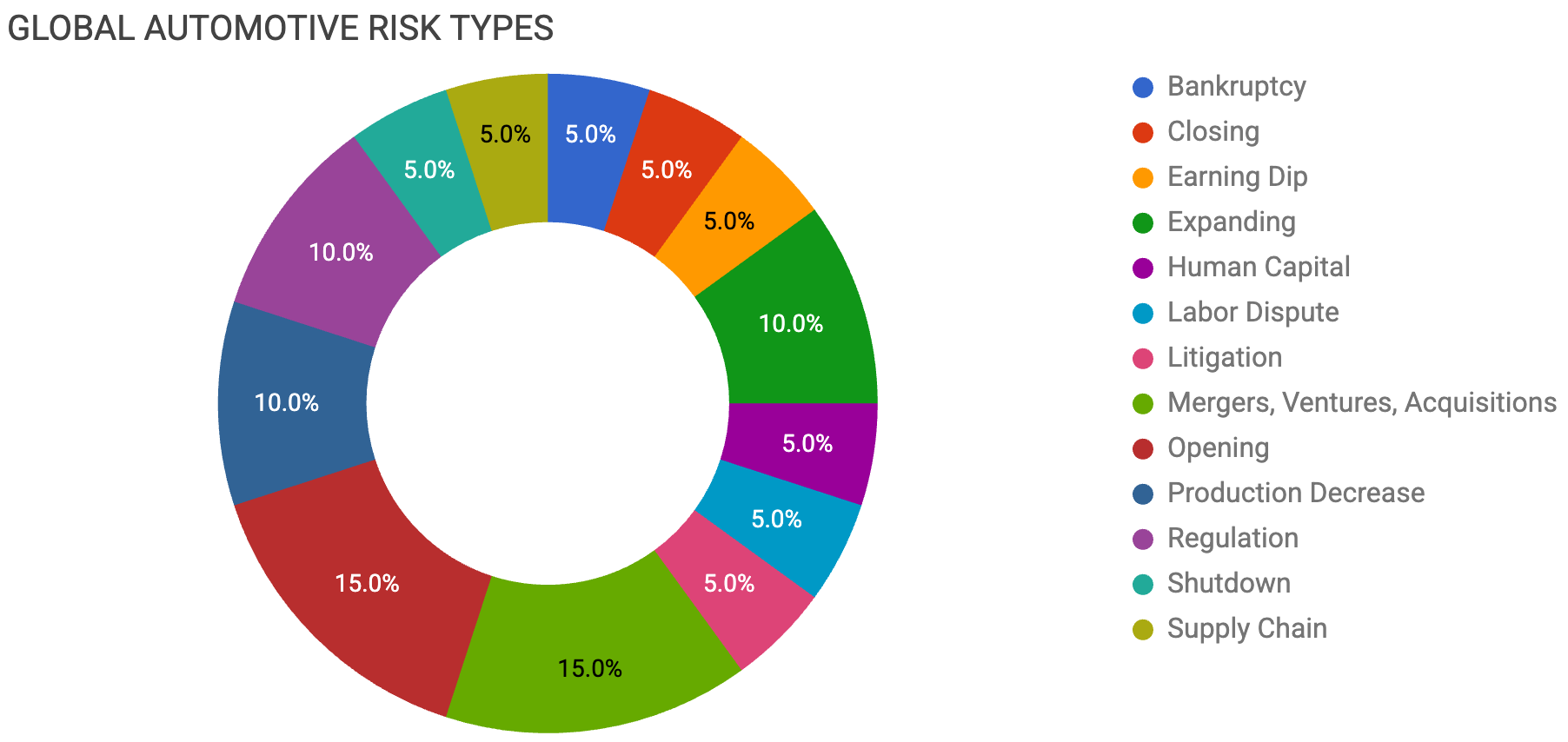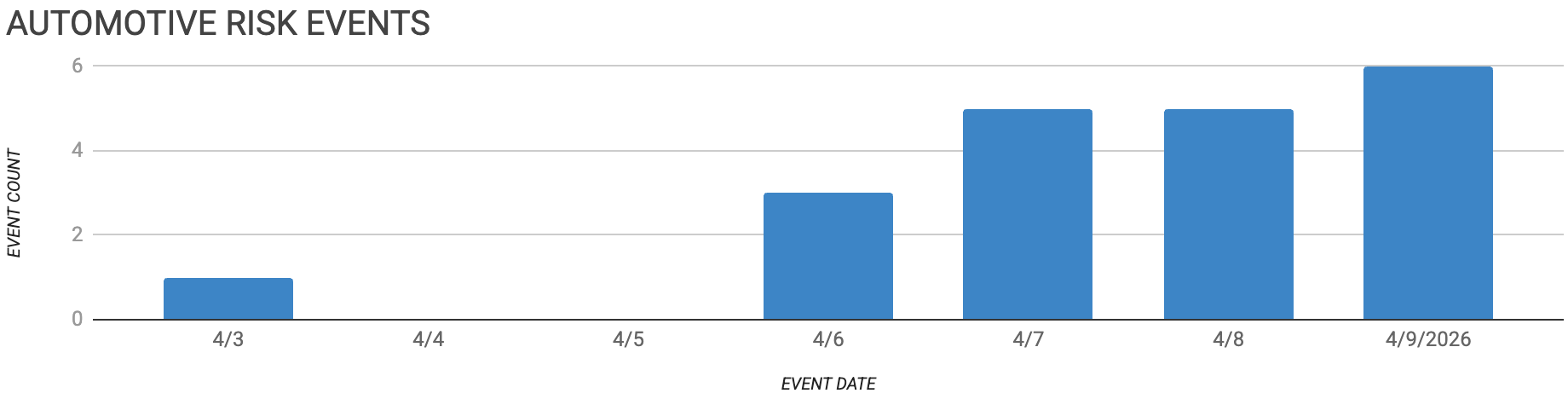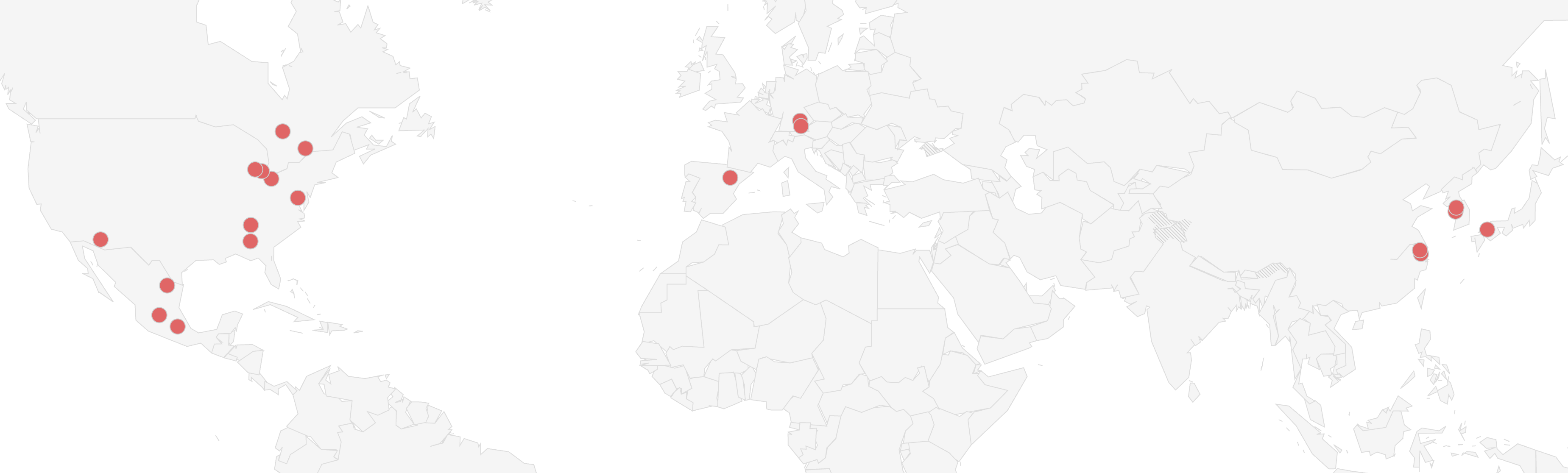
Contents
BANKRUPTCY
First Brands wipers business shutdown sale
CLOSING
SKF closes Monterrey plant, shifts production
EARNING DIP
LG Energy reports loss, weak demand
EXPANDING
Kia invests in Mexico EV capacity
Hyundai Mobis expands Nuevo Leon
HUMAN CAPITAL
Audi faces renewed labor tensions
LABOR DISPUTE
GM Silao union reaches agreement
LITIGATION
Stellantis & Kamax settle contract dispute
MERGERS, VENTURES, ACQUISITIONS
Mutares acquires Magna supplier units
Stellantis Opel EV with Leapmotor tech
Electra restarts cobalt refinery project
OPENING
Shenda launches NEV components plant
InfiMotion unveils Jiaxing manufacturing base
GMB USA opens Alabama facility
PRODUCTION DECREASE
Mazda halts production for Middle East
Lucid deliveries miss on supply issues
REGULATION
US maintains ban on Chinese autos
USMCA review unlikely by deadline
SHUTDOWN
VW ends ID4 US production
SUPPLY CHAIN
Hyundai reroutes shipping around Hormuz

Bankruptcy
Bankrupt auto supplier First Brands Group has shut down its windshield wiper business after OEM customers exited key programs, gutting revenue and making a going-concern sale unfinancable. The company is now seeking court approval to sell the intellectual property behind its Trico, Anco, and ExactFit brands to Premium Guard affiliate PGI Northstar for $25M in cash, plus royalties totaling up to $ 45M. Manufacturing has already ceased, and advisors warned the court that brand value could erode further if products stay off shelves. First Brands continues to market its Toledo Molding & Die and Jasper Rubber Products units, though WARN notices indicate potential layoffs if no buyers emerge. The Cleveland-based company filed Chapter 11 in September 2025, carrying more than $9B in liabilities tied to allegations of fraud by former executives.

Closing
Swedish bearing maker SKF is closing its Monterrey factory and shifting production to existing plants in Puebla and La Silla, cutting roughly 390 jobs while creating about 100 new positions. The Monterrey site opened in October 2023 after a $73M investment, but became oversized after SKF separated its automotive and industrial divisions, and EV demand grew more slowly than expected. The restructuring will carry a one-time charge of about $54M, booked in Q2 2026. SKF said the move is designed to reduce excess capacity while preserving the technical capability to scale back up if demand for electrification accelerates.

Cyber Security
Murata Manufacturing, a major automotive electronic components supplier, disclosed that a cyberattack on one of its internal information-sharing systems resulted in the unauthorized access of customer, business partner, and employee data. The company said it has blocked the access route, tightened external access restrictions, and is working with outside cybersecurity experts to investigate the cause and prevent recurrence. Murata confirmed that core systems supporting purchasing, production, and shipping were not affected, and there has been no disruption to operations. The company plans to notify affected customers and business partners individually.

Earning Dip
LG Energy Solution reported a Q1 operating loss of $139M, worse than analyst estimates of a $107M won loss, as weaker battery demand from automakers weighed on results. Revenue fell 2.5% year over year to $4.4B, and without the US Inflation Reduction Act production tax credits, the loss would have reached $237M. The company is pivoting toward energy storage systems (ESS) to offset soft EV battery sales and is targeting a tripling of ESS revenue this year. Analysts also flagged a proposed US bill, the CHARGE Act, that would ban imports of certain Chinese-made energy storage systems, potentially opening new opportunities for Korean battery makers.

Expanding
While some suppliers are scaling back EV-related capacity, Kia is pushing ahead with a $600M investment at its Pesqueria plant in Nuevo Leon, Mexico. The spending will fund new production lines aligned with EV manufacturing, as well as sustainability upgrades, including solar panels, energy-efficiency improvements, and water treatment systems.

Not too far from Kia, Hyundai Mobis is investing roughly $59M to expand its operations also in Nuevo Leon, a project expected to create about 250 jobs. The company also plans an additional $50M investment in autonomous vehicle technologies and semiconductor capabilities. Hyundai Mobis has operated in Pesqueria since 2014, employing over 4k workers across operations that include automotive modules, chassis and safety systems, braking, airbags, lighting, electronics, and battery system assembly.

Human Capital
Those investments stand in contrast to conditions in Europe, where Audi is facing renewed labor tensions over the prospect of additional cost cuts beyond what was agreed in March 2025. CEO Gernot Dollner signaled that further efficiency measures may be needed from VW Group's perspective, drawing a sharp response from labor leaders who say employees are already contributing through planned cuts of up to 7.5k jobs by 2029. Tensions are compounded by uncertainty over the future of the A8 flagship sedan, with employee representatives pressing management to commit to building any successor at the Neckarsulm plant.

Labor
On the labor front in Mexico, the independent union at GM's Silao plant reached a preliminary contract agreement covering 2026 through 2028 that includes a 15% across-the-board wage increase retroactive to March 25. The deal also includes increased grocery vouchers, a higher Sunday premium, paternity leave, and a leveling bonus for workers with 18 years of service. Union leadership called it the best contract negotiation outcome to date in Mexico's automotive industry. The agreement goes to a vote among 7k unionized workers, with a strike deadline of April 15 if the proposal is rejected.

Litigation
Stellantis and fastener supplier Kamax appear to have reached a last-minute settlement in a contract dispute closely watched by the supplier community. The two sides filed a stipulation to dismiss the case just before a Michigan Supreme Court hearing scheduled for April 7, and the court rescheduled oral arguments to its May session. At the heart of the case is a clause in Stellantis contracts committing to purchase "approximately 65% to 100%" of requirements from a given supplier, a range that supplier attorneys argue does not constitute an enforceable requirements contract. While the settlement may end this particular fight, the underlying legal question remains unresolved and could still be taken up by the court, given its significance to North American auto supply contract law.

Mergers, Ventures, Acquisitions
German investment firm Mutares has signed agreements to acquire two automotive supplier businesses from Magna, adding about $320M in combined annual revenue. The first deal brings Magna's European automotive lighting business into the Amaneos Group, creating an integrated exterior and lighting systems platform with roughly $235M in revenue. The second acquires Magna's car-top systems business for the HiLo Group, combining roof architectures with existing hinge and locking system capabilities and generating about $85M in revenue. Both transactions are expected to close in Q2 2026.
Stellantis is in advanced talks with Chinese partner Leapmotor to jointly develop an Opel-branded electric SUV using Leapmotor's architecture, with production targeted at the Zaragoza plant in Spain starting in 2028 at a planned volume of 50k units per year. The deal would let Stellantis cut EV development costs and time while improving utilization at its European plants and competing more effectively against BYD and other Chinese brands. Leapmotor would supply key technologies and electronic components, while Opel would handle exterior design, with much of the development taking place in China. Stellantis has also begun preliminary discussions about using the same architecture for an Alfa Romeo model at Zaragoza.
Electra Battery Materials has restarted full-scale construction on what it calls North America's first cobalt sulfate refinery near Temiskaming Shores, Ontario, after a roughly two-year pause. The facility is designed to produce 6.5k tonnes per year of battery-grade cobalt sulfate, a key precursor for NMC lithium-ion cathodes. Electra has secured $82M in total funding against a $73M construction budget, drawing on a US Defense Department grant, Canadian and Ontario government support, and equity financing. Early commissioning is expected in Q4 2026 with commercial production targeted for Q4 2027. The project addresses a critical supply chain gap, as cobalt sulfate refining is currently concentrated in China, even though most ore originates in the Democratic Republic of Congo.

Opening
In China, Suzhou Shenda Auto Parts broke ground on a new $23M facility for new-energy vehicle components in the Suxiang Cooperation Zone of Suzhou Industrial Park. The 279k ft² plant will focus on thermal management systems and electronic water pumps for NEVs. Shenda, founded in 1999, specializes in automotive after-treatment systems and supplies automakers such as JAC and Foton. The project adds to a growing cluster of EV-focused suppliers in the zone, alongside firms such as Fuyao Glass and Lisheng Auto.
Staying in China, InfiMotion officially unveiled its newly rebranded Jiaxing manufacturing base, formerly operated as Zhejiang Xuanfu Technology. The 622k ft² facility focuses on electric-drive systems, drones, and range extenders, broadening InfiMotion's portfolio. The addition gives InfiMotion six manufacturing facilities across the Yangtze River Delta.
South Korean supplier GMB USA announced a $9M production facility in Opelika, Alabama, that will create 75 jobs manufacturing hybrid electric vehicle components, including active purge pumps, electric water pumps, electric oil pumps, and integrated thermal management systems. The plant is expected to begin operations in the coming months.

Production Decrease
Mazda has halted domestic production of vehicles destined for the Middle East in April and May due to the effective closure of the Strait of Hormuz, a key shipping route for roughly 30k vehicles per year to Saudi Arabia, Israel, and other regional markets. Growing inventory levels forced the decision, even though the company had initially maintained production while exploring alternative routes. Mazda plans to redirect output toward Europe and other markets where demand is rising. Toyota and Nissan have also cut Middle East-bound production, with Toyota slashing roughly 44k units across March and April.
The disruption in the Strait of Hormuz is just one of several supply chain pressures hitting automakers this quarter. Lucid Group missed Q1 delivery expectations after a 29-day sales halt tied to a supplier quality issue with second-row seats on its Gravity SUV. The company delivered 3k vehicles against analyst expectations of 5.2k, and recalled 4.4k Gravity SUVs due to seatbelt anchor welds that did not meet safety standards following an unauthorized supplier change. Lucid maintained its full-year production forecast of 25k to 27k vehicles but acknowledged ongoing supply challenges, including tariff impacts, chip shortages, uncertain rare-earth supplies, and fallout from the fire at Novelis' aluminum plant.

Regulation
On the trade policy front, US Trade Representative Jamieson Greer confirmed that the Trump administration has no plans to change rules adopted under Biden that effectively bar Chinese vehicles from the US market due to national security concerns about data collection. Software prohibitions took effect in March, and hardware restrictions will follow in 2029. Greer noted those rules would make it difficult for Chinese automakers to establish US production, even as Trump had previously expressed openness to Chinese-built plants. Bipartisan opposition in Congress remains strong, with Democratic senators urging Trump to block Chinese automakers entirely and Republican Senator Bernie Moreno proposing legislation to permanently seal off the market.
Rounding out the trade picture, Greer also said he does not expect negotiations on the USMCA review to be fully resolved by the July 1 notification deadline, though progress is being made on multiple fronts. The review presents three options for each country: renew for 16 years, withdraw, or signal non-renewal, which would trigger up to a decade of annual reviews. Trump has called the agreement irrelevant, and Greer has floated replacing it with two bilateral deals. Key friction points include rising vehicle imports from Mexico, and steel and aluminum shipment levels that the US says exceeded informal understandings. Formal US-Canada negotiations have not yet launched, though both sides describe recent conversations as productive.

Shutdown
Volkswagen announced it will end US production of the ID.4 electric SUV at its Chattanooga plant within weeks, replacing it with the gas-powered Atlas SUV. The shift reflects weaker EV demand in the US following the expiration of the $7.5k federal tax credit, even though VW's EV sales had been trending upward prior to that policy change. VW will continue selling the remaining ID.4 inventory through the end of the model year and says an updated version is planned, though it has not confirmed where that model will be built.

Supply Chain
Hyundai is also rerouting its global shipping fleet around the Cape of Good Hope to bypass the Strait of Hormuz, adding 10 to 15 days to transit times for components shipped to European plants. CEO Jose Munoz declared that "globalization is over" and outlined a shift toward regionalized production clusters, replacing annual supply chain reviews with weekly assessments. The disruption is significant for Hyundai-Kia, which sourced 82% of its 2025 sales from Korean production. In the US, Hyundai is adapting its Georgia plant to add hybrid and range-extended production alongside BEVs, targeting 1.2M units of annual U.S. capacity by 2030 with 80% local supply chain integration.